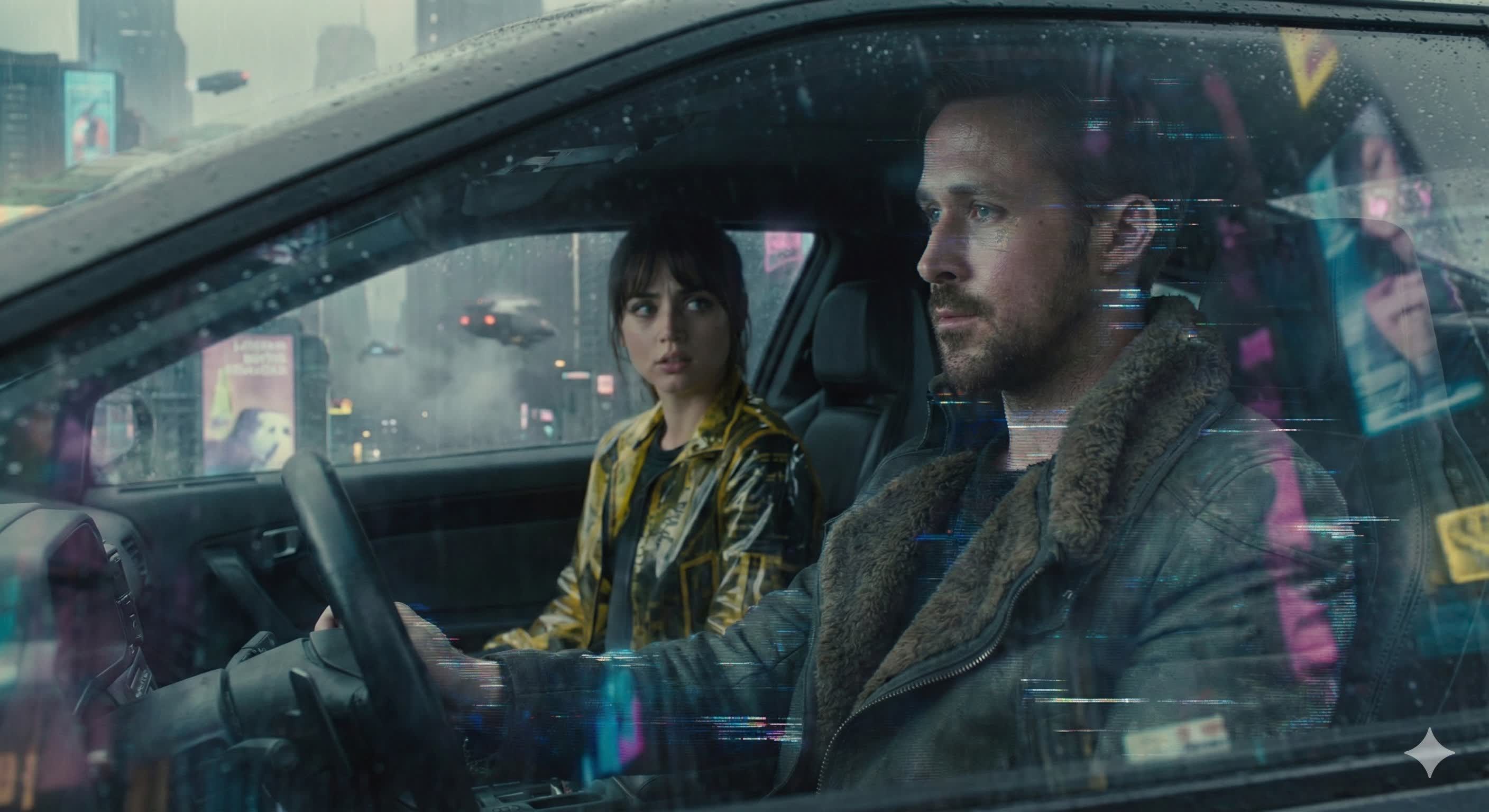
First look: Google's latest generative model comes with a ridiculous name, but it's powered by a surprisingly serious engine. Nano Banana Pro recently debuted inside Gemini bringing a major jump in image generation quality – and judging by the last week's worth of community samples, Google's image outputs aren't just competent… they're worryingly impressive, too.
For months, sentiment in the AI community has been shifting. After years of trailing models like DALL-E, Midjourney, and OpenAI's latest, creators are now saying Google has caught up in key benchmarks and visual fidelity. And in image generation specifically, it suddenly looks like Google may have the most convincing lead of all.
Nano Banana vs Nano Banana Pro
– sid (@immasiddx) November 24, 2025
We're cooked. pic.twitter.com/LRoJhALaZD
Nano Banana Pro focuses on the kinds of things image models have historically whiffed on: fine-grained prompt reasoning, subtle editing, and treating typography as actual type rather than "AI hieroglyphic," a.k.a. AI slop.
10. Electric Guitar pic.twitter.com/9XBYPWKblM
– Jainam Parmar (@aiwithjainam) November 28, 2025
We've tried Nano Banana and we can assure results will heavily depend on a good prompt (here's the prompt used for this story's top image), but there are plenty of community samples showing the model interpreting long prompts with uncanny consistency and clarity. The results are reproducible, too.
Nice Nano Banana Pro prompt for weather app:
– Pavol Rusnak (@PavolRusnak) November 30, 2025
CITY=Prague,Czechia
Present a clear, 45° top-down isometric miniature 3D cartoon scene of [CITY], featuring its most iconic landmarks and architectural elements. Use soft, refined textures with realistic PBR materials and gentle,... pic.twitter.com/TB16OEeShQ
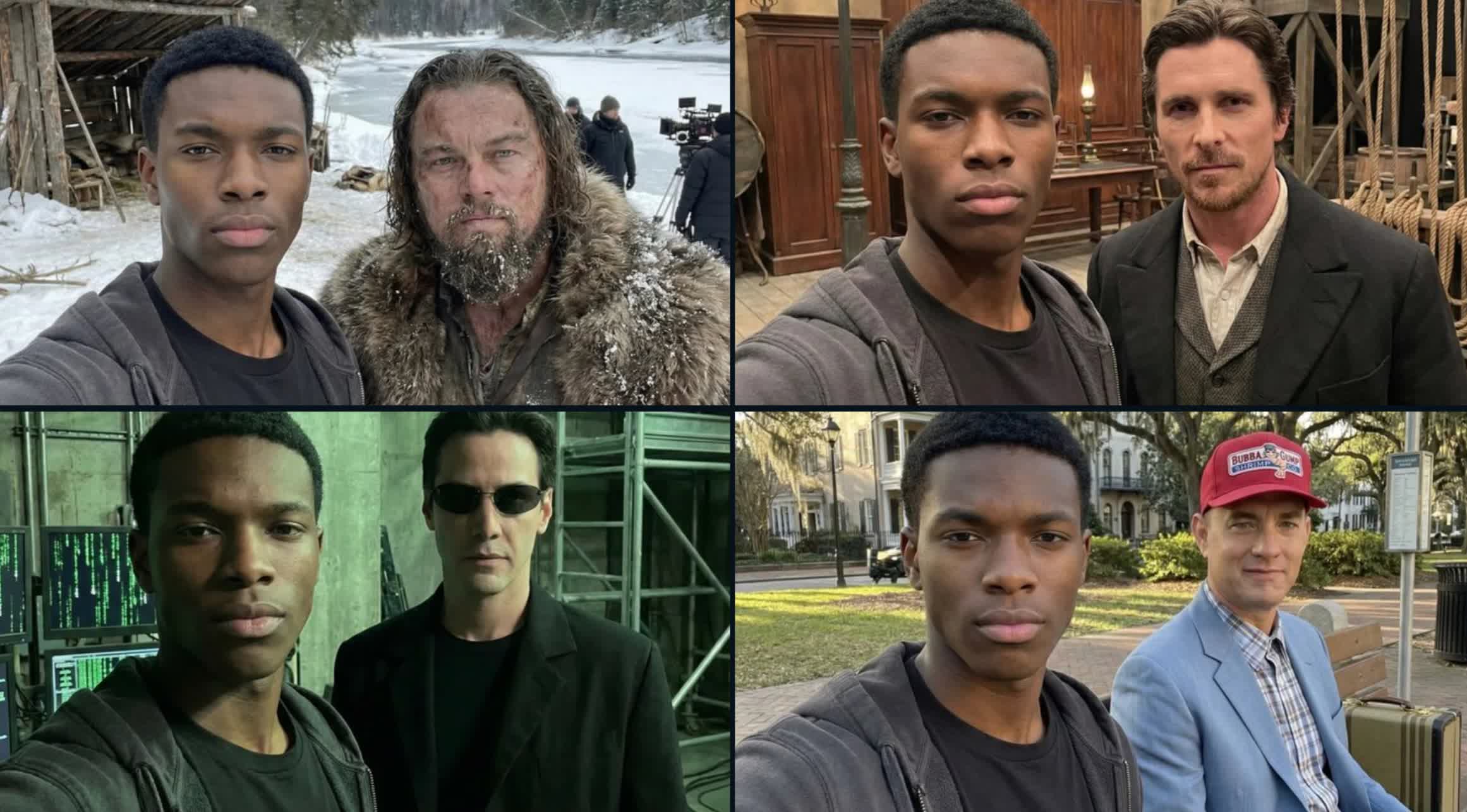
Nano Banana Pro brings new features like merging up to 14 reference images, while retaining identifiable features from as many as five individuals for more accurate multi-person compositions. Face geometry, color tone, and style motifs carry over from image to image, making it easier to build cohesive sets inside a single session.
– TechHalla (@techhalla) November 28, 2025
🍌 nano banana prompt
– 宝玉 (@dotey) November 30, 2025
3D chibi-style miniature concept store of {Brand Name}
--- Prompt ---
3D chibi-style miniature concept store of {Brand Name}, creatively designed with an exterior inspired by the brand's most iconic product or packaging (such as a giant {brand's core… pic.twitter.com/VTm79m9kpf
Editing no longer nukes the original. Upload a photo and tweak only what matters: shadows, camera angle, color grade, or background design. The rest stays untouched. Early testers have shared iterative shots that feel like a human designer slowly dialing in revisions, not a generative roulette wheel spinning a whole new interpretation every time.
Localization is an underhyped feature of image edit models.
– Justine Moore (@venturetwins) November 28, 2025
Now, an image can look like it was taken anywhere in the world.
I uploaded the Notion NYC photo and asked Nano Banana Pro: "fully localize this to Tokyo, Japan"
It changed the language, people, and even the stoplight! pic.twitter.com/bT2qaX3DSe
A clever workflow is also making the rounds: having Gemini analyze an image, convert it into a JSON-style structural prompt, and then feeding it back to Nano Banana Pro for highly specific, granular adjustments. Instead of reimagining the entire scene – the way most GenAI models still do – the system isolates changes to exactly the parts you specify.
Photo recreation using Gemini Nano Banana Pro
– Data Exec (@DataExec) November 26, 2025
Prompt:
A lifelike, high-fidelity colorization of the provided image, upscaled to 4k resolution. Apply natural, complex coloring to the entire scene, focusing on realistic skin tones, authentic material textures, and environmental… pic.twitter.com/3iPagKg3St
With support for 4K renders, Nano Banana Pro pushes beyond "cool demo." Users are posting infographics, technical diagrams, marketing concepts, and product mockups generated in a single pass. Watermarking is also baked in using SynthID embed, an important safeguard as image quality improves enough that it's becoming harder to differentiate generated photos from real life.
You can use Nano Banana Pro to see how furniture would look in a room.
– Nano Banana Pro (@NanoBanana) November 28, 2025
Prompt: Show me how this room would look with furniture in it pic.twitter.com/PcKMASErHC
The broader consensus forming in the final stretch of 2025 is that Google's AI is finally catching up. Not just on image generation, but in broader model quality – even as it also positions its TPU strategy as a long-term alternative to Nvidia for data-center-grade compute.
Gemini is really breathing down ChatGPT's neck now
– Morning Brew ☕️ (@MorningBrew) December 1, 2025
* Closing gap on monthly downloads (100.8M vs. 67.8M in November)
* Users now spend more time in Gemini than ChatGPT pic.twitter.com/bsb3cSgGqK
Nano Banana Pro lives inside Gemini, gated by subscription tiers. Free users can experiment, but with tightly limited throughput – likely the reason this hasn't turned into Google's big AI, culture-defining "Ghibli moment." Still, if the community demos keep rolling in at the current pace, the "banana model" may go down as the inflection point where Google's image generation started looking like the standard.