
Winners & losers: Memory price hikes stemming from the AI craze have triggered domino effects across the tech industry: pushing up hardware costs, restricting availability, and even reshaping business strategies. New reports confirm earlier concerns that graphics cards will become more expensive in 2026 – even if slightly for now – though CPUs appear unaffected.
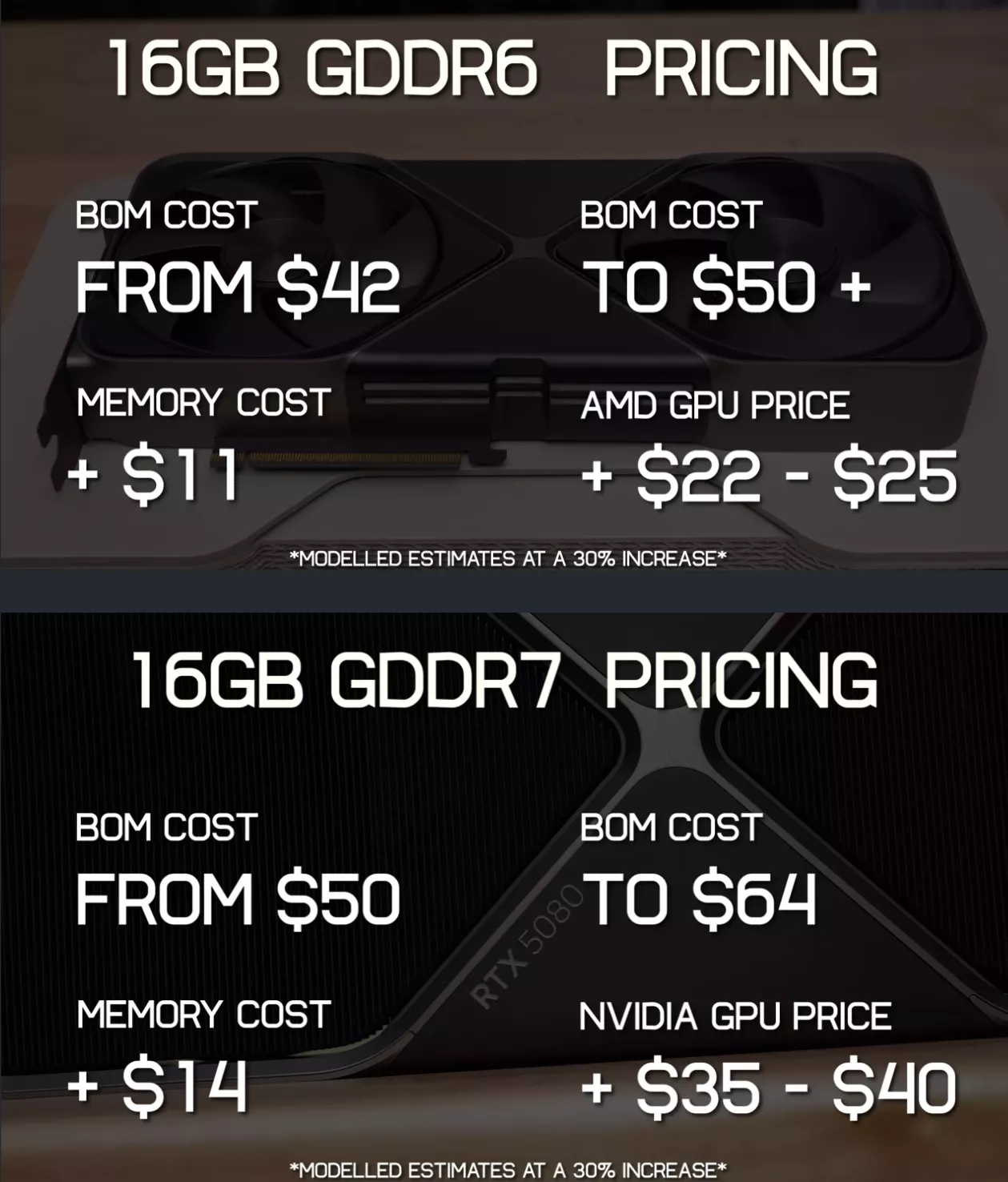
An anonymous industry distribution source recently told Tom's Hardware that memory module prices for AMD's latest Radeon graphics cards sent to board partners have risen by $10 per 8GB. These increases are expected to eventually trickle to retail, with subsequent price adjustments expected in January.
The adjustment, the second to hit AIB partners, will only affect Radeon RX 9000 GPUs. Assuming partners pass the costs directly to consumers, RX 9060 models with 8GB of VRAM might only receive $10 price hikes, but 16GB Radeon 9060 and 9070 cards could jump by $20. Some companies will attempt to delay the adjustments, but they will ultimately reverse the recent downward pricing trends that helped AMD's new products finally sink to MSRP levels months after launch.
Also read: Cost Per Frame: Best Value Graphics Cards Right Now
Memory prices are rising industry-wide, as most DRAM and NAND stock is being funneled into AI data centers, creating a shortage that could extend through 2028. Micron recently announced plans to redirect its entire supply to AI companies after three decades as one of the primary providers of consumer memory.
Nvidia is "feeling" the impact as well. RAM shortages could force the company to delay or outright cancel the RTX 50 Super series refresh it had planned. It may also have stopped supplying VRAM to board partners, and both major GPU makers could scale back or simply halt production of budget graphics card models.
Although Black Friday and Cyber Monday have passed, shoppers can still find discounts keeping Nvidia and AMD GPUs at – or below – MSRP. For many, now may be a good time to upgrade to new generation GPU like AMD's Radeon RX 9070 or Nvidia's GeForce RTX 5070, if you've been waiting for the right moment. With luck, the situation won't reach the severity of the crypto-driven GPU frenzy from several years ago.
Fortunately, sources also told Tom's Hardware that there's no indication similar price increases are coming for AMD Ryzen processors. Unlike GPUs, storage, or even motherboards, DRAM and NAND supplies don't directly impact CPUs. Still, users planning to upgrade to their first AM5 processor might have trouble finding the required DDR5 RAM at decent prices.