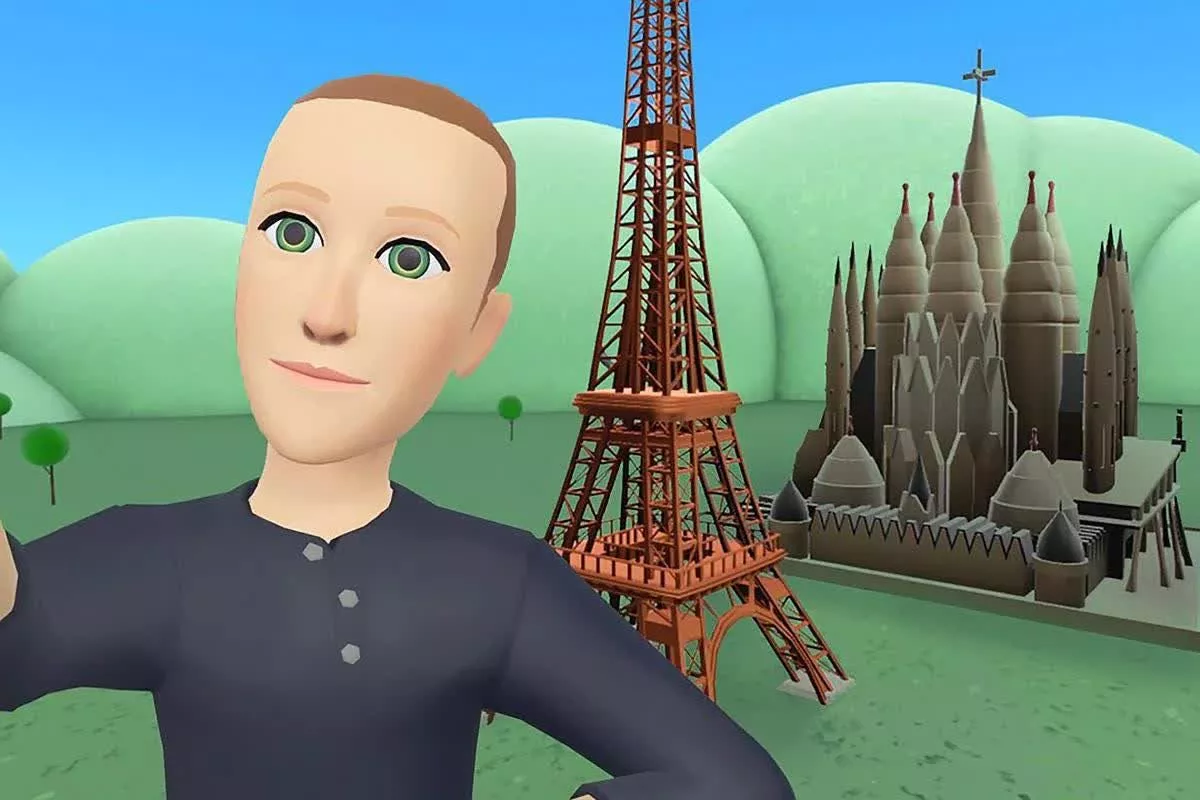
Bottom line: After burning tens of billions and stubbornly insisting the metaverse would eventually justify the cost, Mark Zuckerberg appears to be backing away from his most ambitious project. Once its defining obsession, it appears that Meta's boss has finally decided to cut his losses: the metaverse could be on the way out.
Reality Labs encompasses several areas of Meta's VR/AR business, but Bloomberg writes that two of them will be hit hardest: Horizon Worlds and virtual reality. Zuckerberg is planning to slash Reality Labs' budget by 30%, with the cuts coming as early as January 2026.
A Meta spokesperson confirmed some elements of the report, stating that "we are shifting some of our investment" from the metaverse group toward AI glasses and wearables as it looks to capitalize on the "momentum" in the segment.
Meta has placed a lot of effort into its smart glasses products recently. In September, the company unveiled the second-generation Ray-Ban Meta, the Oakley Meta Vanguard, and the Meta Ray-Ban Display.
Meta's stock was up 3.4% on the back of the news, and it's easy to understand why. Since Meta started reporting Reality Labs' revenue in Q4 2020, the division has reported total operating losses of around $70-75 billion (not million).
Zuckerberg has had an unwavering faith in the concept. His belief that an immersive AR/VR metaverse would one day be as popular as smartphones resulted in Facebook changing its corporate name to Meta in 2021.
The CEO repeatedly said that the industry will be worth billions or even trillions of dollars after 2030 – Meta even commissioned a report in 2023 that claimed the metaverse could contribute $760 billion to the US GDP by 2035.
But then the generative AI revolution took off. The tech industry found a new obsession as the idea of everyone interacting in a virtual world became less popular.
Now, of course, Meta is pouring billions into AI. For 2025, the company raised its capital-expenditure forecast to about $70-72 billion, a figure that links heavily to AI infrastructure such as data centers, compute hardware, cloud, and related investments.
Meta (and most of the tech industry) will no doubt hope that this time, the huge spending does pay off. But Zuckerberg doesn't seem worried either way. "If we end up misspending a couple of hundred billion dollars, I think that that is going to be very unfortunate, obviously," he said in September. "But what I'd say is I actually think the risk is higher on the other side."