
Something to look forward to: Intel is pressing ahead with its discrete graphics business despite the relatively lukewarm reception from gamers and creative professionals. The company now appears ready to release a new graphics card powered by the BMG-G31 GPU, commonly referred to as "Big Battlemage" across social media, tech sites, and online forums.
The G31 was recently confirmed after appearing on Intel's official website as one of the GPUs supported by the company's VTune Profiler performance analysis tool. Reports suggest that the first card to feature the new chip could be the provisionally titled Arc B770, although Intel has yet to officially confirm this.
Big Battlemage has been circulating in the news for more than a year, with key specifications leaking from multiple sources. According to these reports, the G31 will be a more powerful successor to the G21, which powers the Arc B580 and B570. The new chip will reportedly be manufactured by TSMC on its 5nm process and feature a larger die than the G21.
The G31 in its B770 form is expected to feature 32 Xe2 cores, a 60 percent increase over the 20 Xe2 cores in the B580 and the 18 found in the B570. Rumors suggest the B770 could ship with 16GB of GDDR6 VRAM on a 256-bit memory bus, along with a PCIe 5.0 x16 interface. Other reported specifications include a possible 19 Gbps memory speed and up to 608 GB/s of memory bandwidth.
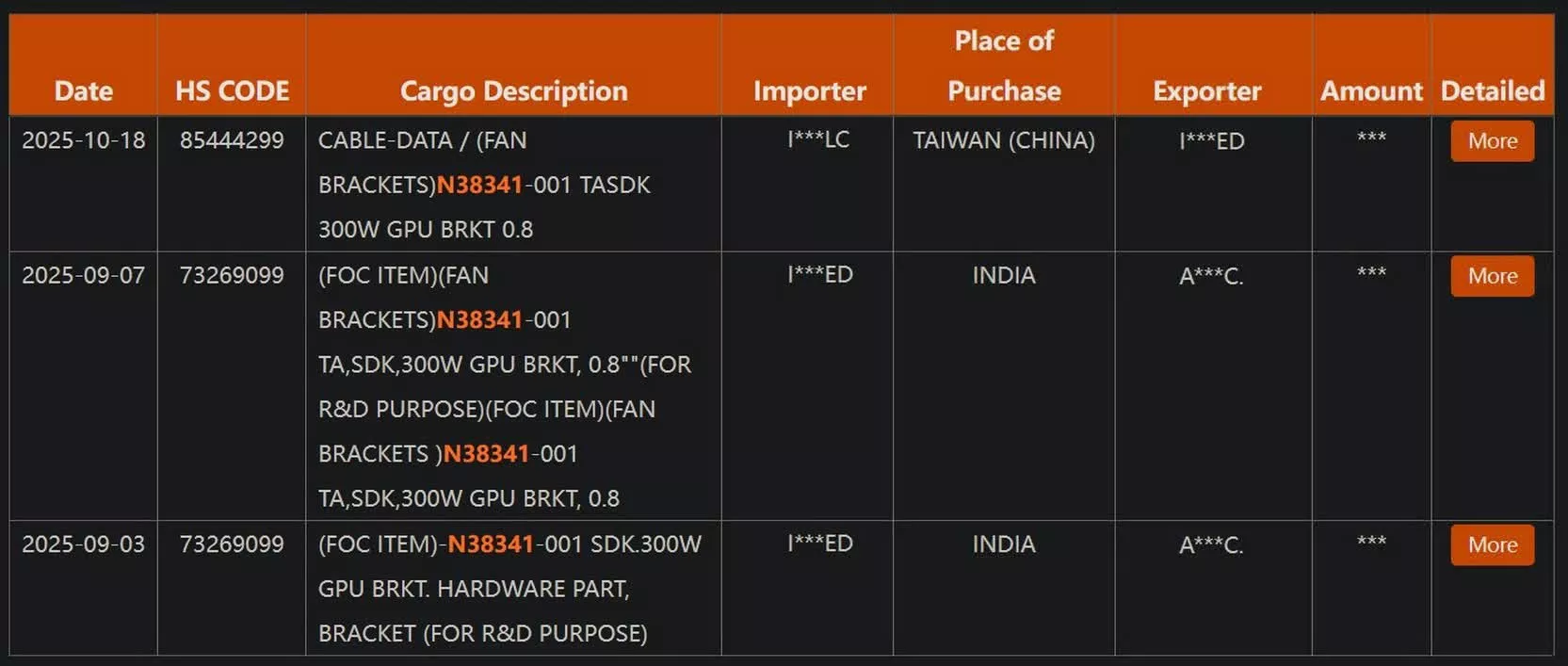
An unofficial leak also indicates that the G31 may be significantly more power-hungry than the G21. According to a listing in an NBD shipping manifest, an engineering sample of the upcoming Battlemage card reportedly carries a 300W TDP, far above the 190W rating of the Arc B580 and even higher than the 225W TDP of the Arc A770.
So far, only the gaming-oriented version of the G31 has surfaced, but Intel is also expected to announce a Pro variant with 32GB of memory. The new GPU is rumored to debut alongside Intel's Panther Lake CPUs at CES 2026 in January. However, we will likely only see the Arc B770 at the show, with the Pro model slated for a later launch.