
The big picture: Tesla has been at the forefront of the EV revolution, delivering blazing performance, advanced driver-assistance features, and an extensive Supercharger network. However, a new survey reveals that Teslas may not be the most reliable vehicles on the market and might fall short in terms of overall ownership experience.
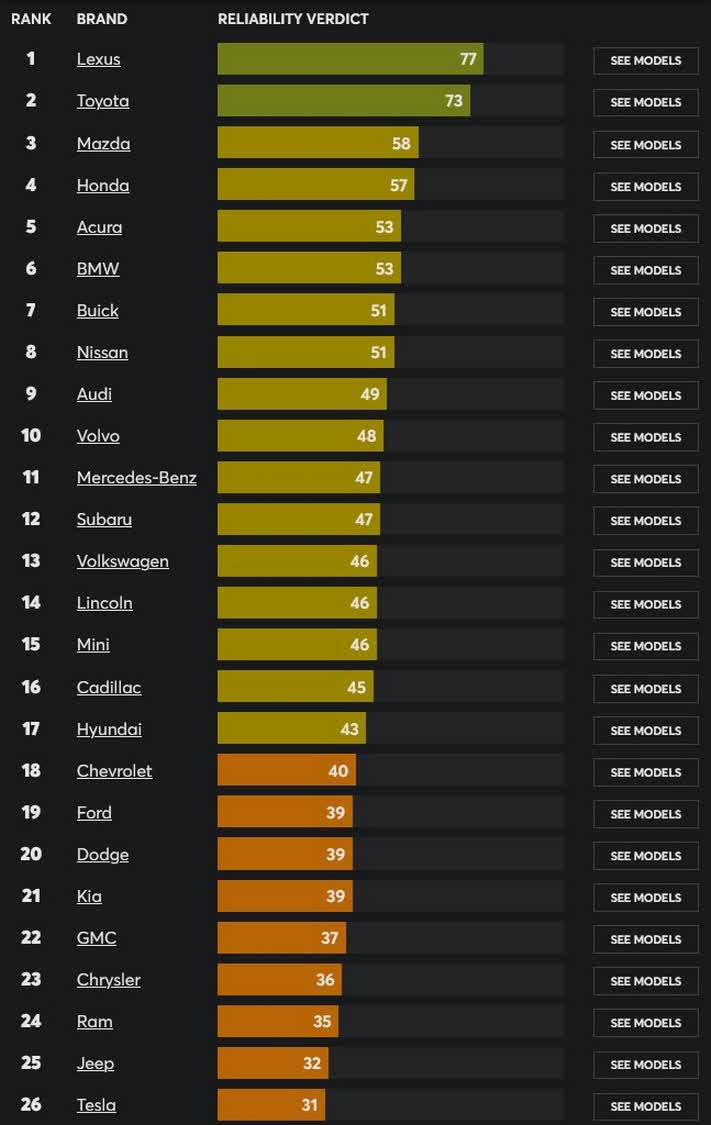
According to Consumer Reports' 2025 used vehicle reliability study, Tesla is the most unreliable used car brand in the US. It placed last among 26 automotive brands with a reliability ranking of 31 – below Jeep (32), Ram (35), and Chrysler (36). The study evaluated the reliability of 5- to 10-year-old models on the second-hand market.
While the results may seem like a damning indictment of Tesla, the report notes that the company has improved the build quality of its vehicles. All of its latest models now offer "better-than-average reliability," and Tesla ranks among the top 10 brands in Consumer Reports' new car predictability rankings, surpassing established automakers like Ford, Chevrolet, Mercedes-Benz, Audi, and Volkswagen.
While newer Teslas are more reliable than older models, the company has issued several recalls across most of its lineup, including the flagship Model S and the all-new Cybertruck. Earlier this year, Tesla recalled more than 46,000 Cybertrucks to fix an exterior panel that wasn't properly secured and could detach while driving.
In January, the company recalled over 200,000 vehicles due to a software glitch affecting rearview cameras. In recent years, Tesla has recalled millions of cars for issues ranging from autopilot bugs, brake fluid detection problems, and faulty seat-belt warning systems, to malfunctioning touchscreens and power steering failures.
Used Tesla prices have fallen sharply since the pandemic years, when federal tax credits helped fuel demand for EVs in the US. Since those credits were rolled back under President Trump's One Big Beautiful Bill, demand has softened, with consumers increasingly opting for traditional internal combustion vehicles or plug-in hybrids.
Tesla is also facing growing competition from Chinese brands like BYD, which are flooding the market with feature-rich EVs at low prices. Analysts have compared the current situation to the US automotive scene in the 1970s, when Japanese companies such as Toyota and Honda captured significant market share from the Big Three by offering affordable, fuel-efficient cars.