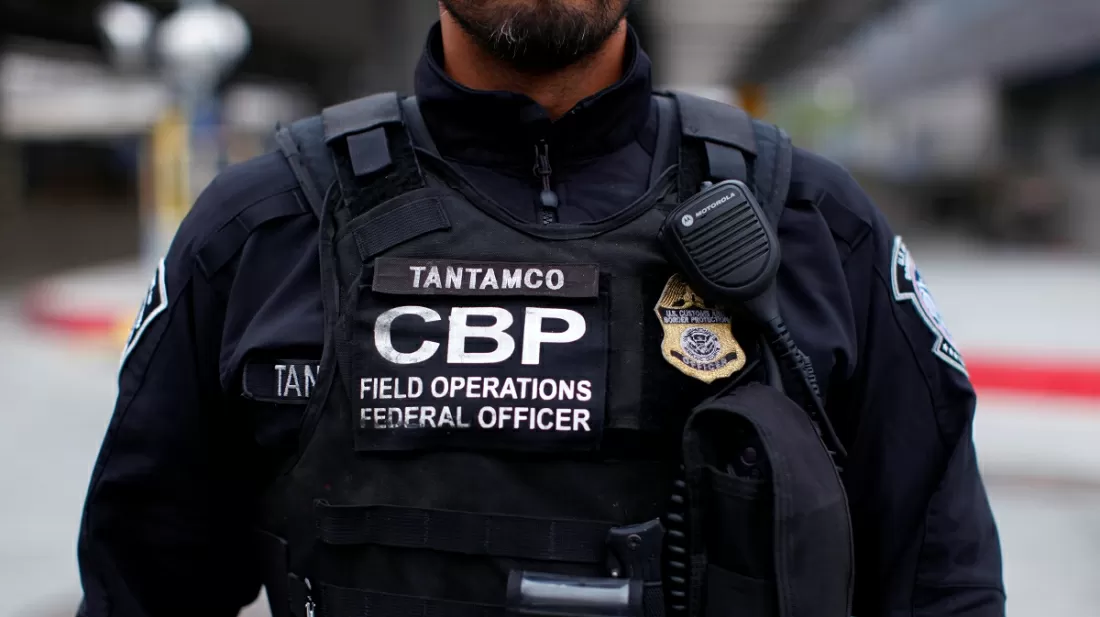
In brief: A man has been charged with destruction of evidence after allegedly erasing the contents of his phone before a Customs and Border Protection (CBP) agent could search it. It's unclear why CBP wanted to search Atlanta-based activist Samuel Tunick's Google Pixel.
Tunick was indicted by a grand jury on November 13, and an arrest warrant was issued the same day. It says that on January 24, he knowingly destroyed the contents of the Pixel phone for the purpose of preventing or impairing government authorities from taking the property into their custody.
Tunick was arrested earlier this month during a traffic stop in Atlanta. According to a statement issued by his supporters, the musician was asked to step out of the car to observe an issue with the tail light. He was handcuffed by the officer and surrounded by the FBI and DHS.
According to the indictment, the phone was supposed to be searched by a supervisory officer from a CBP Tactical Terrorism Response Team.
The prosecution did not seek pretrial detention, and Tunick was released soon after his hearing. He is restricted from leaving Northern Georgia as the case continues.

"The arrest is totally baseless," Kamau Franklin, executive director of Community Movement Builders, said in a press release. "The Trump administration is using political prosecution to distract from growing unpopularity in the polls, defections within the GOP, and a persistent high cost of living."
Many Americans assume that if they wipe a phone or lock it with strong encryption, they're simply exercising their privacy rights. But the moment an electronic device becomes the target of a lawful federal search or seizure, erasing it can itself constitute a crime – even if agents haven't yet obtained physical possession of it.
Under federal obstruction statutes, digital data is treated no differently from physical records. Laws such as 18 U.S.C. §1519 and §2232 make it a felony to destroy or alter information to prevent federal authorities from obtaining it.
Prosecutors increasingly apply these laws to smartphones, arguing that wiping a device after officials signal an intent to search or seize it is equivalent to destroying evidence, regardless of whether the underlying investigation is serious or whether the device contains anything incriminating.
These issues are especially prominent at the US border, where CBP operates under the "border search exception" to the Fourth Amendment.
CBP can conduct basic searches of phones without a warrant, and forensic searches typically require only reasonable suspicion. Despite common assumptions, travelers have limited ability to refuse such examinations.
The law surrounding device unlocking is also concerning. Courts generally allow agents to compel biometric unlocks such as fingerprints or facial recognition, which are treated as physical identifiers.
Passcodes receive greater Fifth Amendment protection, though the government can sometimes compel their disclosure if it already knows what data it expects to find. When officials cannot obtain access, they often detain devices or pursue obstruction charges if data is erased during the process.