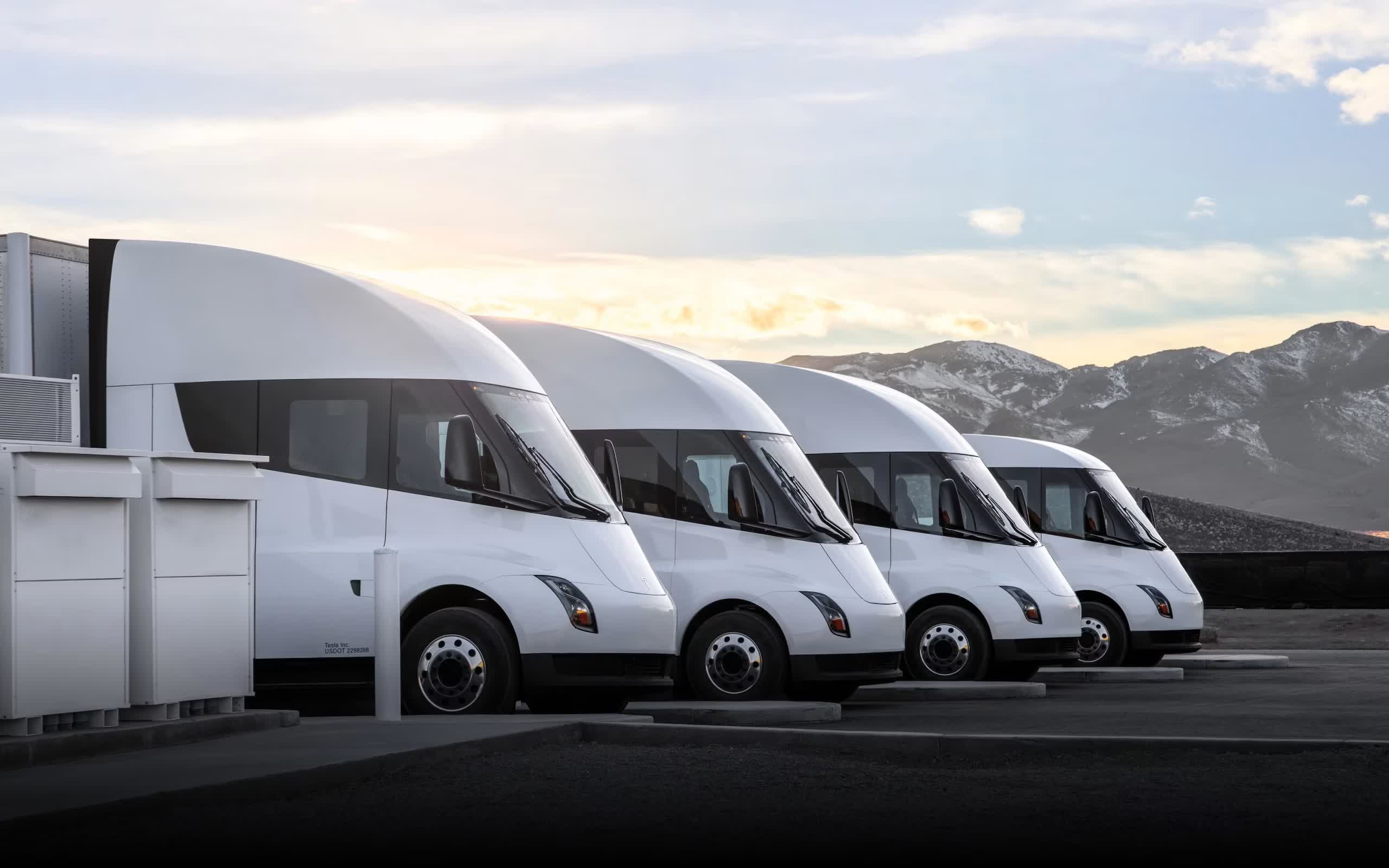
First look: Tesla's long-delayed electric Semi is preparing to enter mass production just as much of the US trucking industry is cooling on battery power. Yet in California's ports and on nearby freight corridors, some of the drivers and fleet owners who have actually spent time behind the wheel say the truck is changing their view of what a heavy-duty EV can do.
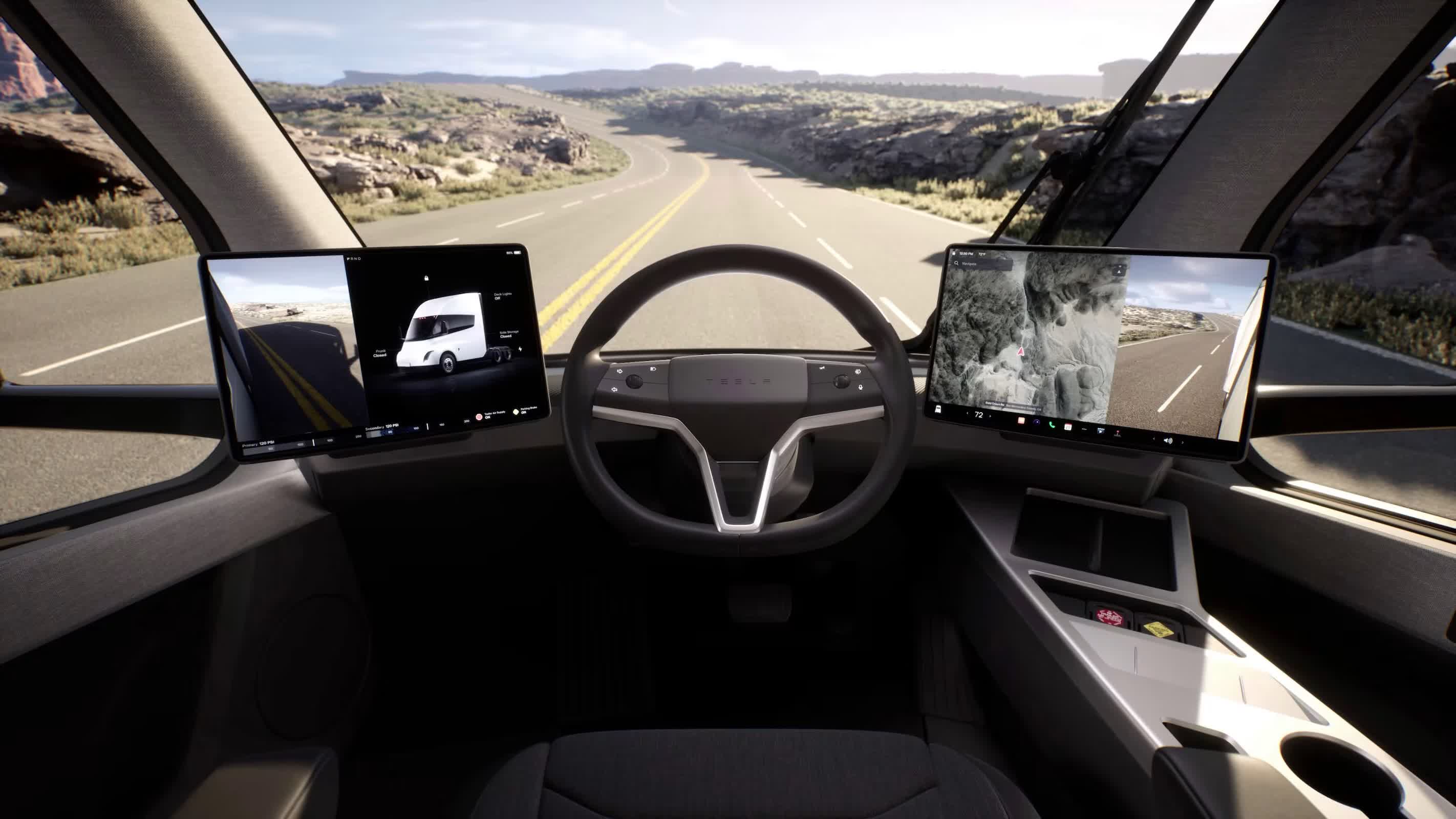
For Dakota Shearer, a driver with IMC Logistics, that shift began on a tight bend outside Sparks, Nevada. He took a wrong turn hauling a 40-foot trailer and found himself on a curve too narrow to complete. In a conventional rig, he would have had to climb in and out of the cab to check his position as he reversed out. In the Tesla Semi, he sat in the middle of the cab, with no right-side blind spot and screens giving a full view around the tractor-trailer. He backed out in one attempt. "It's like I'd never done it in the first place," he told The Wall Street Journal, adding that the experience convinced him the truck's technology "makes a big difference."
Shearer is part of a small group of US truckers who have driven pilot Semis in California. The vehicle, first touted nearly a decade ago as Tesla's entry into heavy-duty trucking, is now scheduled to move from pilots to mass production this summer at the company's Nevada Gigafactory, after years of delays.
According to a report from Tigress Financial Partners, Tesla is expected to deliver between 5,000 and 15,000 Semis in 2026, with annual output eventually ramping to 50,000 trucks.
The move comes just after the Trump administration rolled back federal EV subsidies and eased fuel-economy rules, softening demand for battery-powered vehicles in general. At the same time, trucking companies are wrestling with a prolonged freight downturn, higher labor costs, and tariff-driven trade uncertainty.
Those pressures have made fleets cautious about any capital spending, and especially about trucks that typically cost around three times as much as diesel models, take hours to charge, and often top out at about 200 miles of range.
California, which has pushed hardest to get diesel rigs out of its ports, has also dialed back. Anticipating opposition from Washington, state regulators last year withdrew a mandate that would have required carriers to buy zero-emission trucks. The policy retreat coincided with the collapse of Nikola, a high-profile maker of hydrogen fuel-cell and battery-electric trucks that filed for bankruptcy in early 2025, leaving operators with vehicles that are expensive to refuel and harder to support.
Now, the Semi is arriving with two selling points that matter to fleets: range and duty cycle. Tesla says the truck can travel up to 500 miles on a single charge, with another variant rated at 325 miles. For King Fio Trucking in Long Beach, California, those numbers translate directly into additional routes.
The company already runs 11 battery-electric trucks from Volvo and Nikola but limits them to short drayage runs because they offer roughly 225 miles of range. By contrast, King Fio's co-founder and CEO, Jennie Abarca, says the Semi's 500-mile rating would allow two to three round trips a day from Long Beach to warehouses in the Inland Empire, or a round trip to Las Vegas, on one charge. She has placed orders for 20 Semis and hopes eventually to replace all 27 of the company's diesel trucks.
Tesla has not publicly disclosed the Semi's sticker price and did not respond to requests for comment. Buyers are bound by nondisclosure agreements.
People familiar with orders say the trucks are priced under $300,000, or roughly double the cost of a comparable diesel rig, and around $100,000 less than some competing battery-electric trucks.
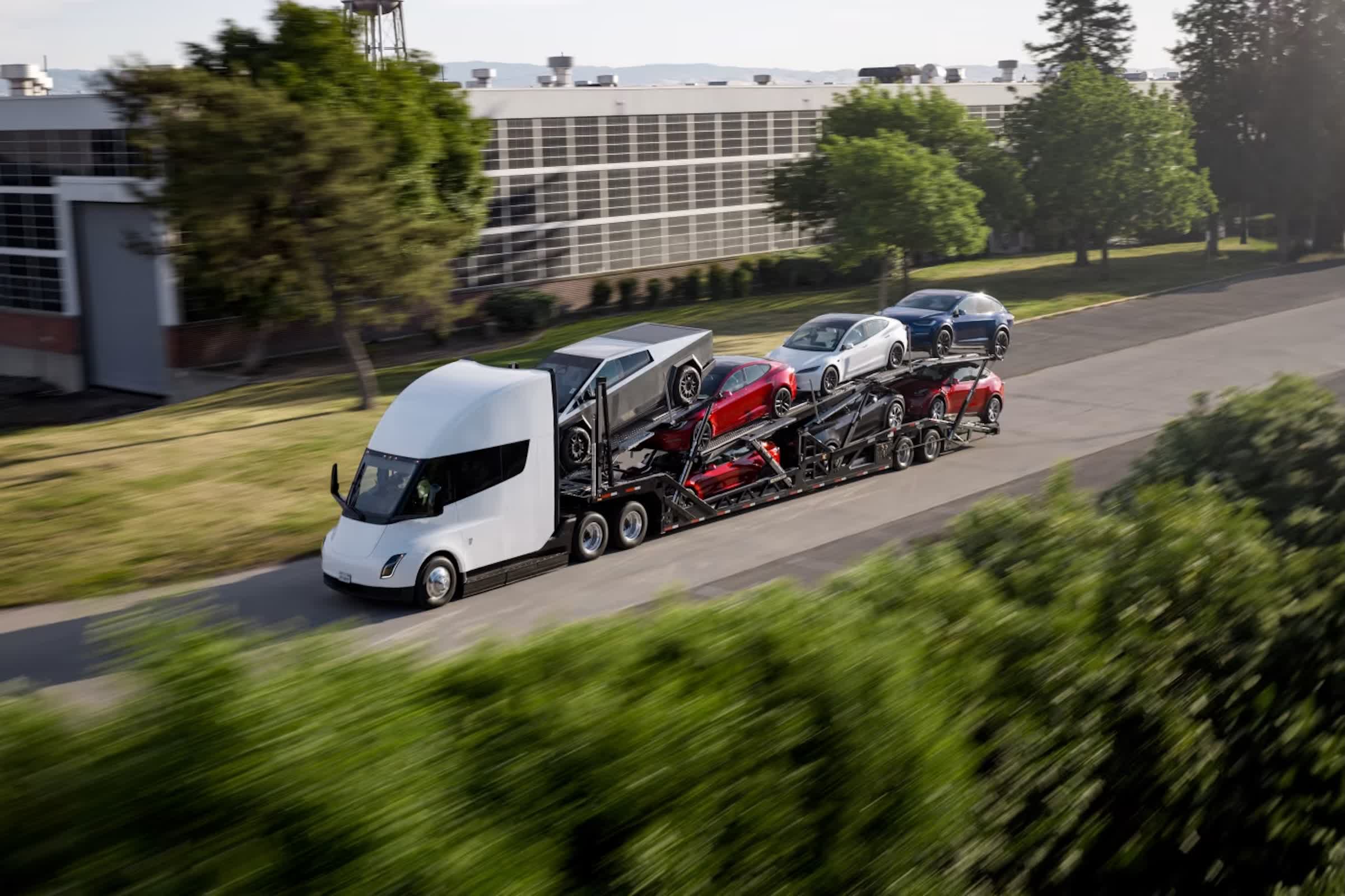
Proponents point to lower maintenance as a counterweight: battery-electric powertrains have fewer moving parts and do not require the same regular servicing as diesel engines. At Big F Transport in Wilmington, California, five mechanics maintain more than 40 diesel rigs and a fleet of chassis. The company's vice president of operations, Geovanny Melendez, who saw the Semi at a recent ride-and-drive near the Port of Long Beach, estimates that a fully electric fleet would need only one mechanic to handle the chassis.
Others urge caution. Robert Braswell, executive director of the American Trucking Associations' Technology & Maintenance Council, notes that high-voltage systems will require technicians with skills closer to those of journeyman electricians than to those of traditional diesel mechanics.
Charging infrastructure is another constraint. Public EV chargers have expanded, but most lack the power levels needed for long-haul Class 8 operations. Tesla has published a map of planned high-power charging sites for Semis along freight corridors in California, Texas, the Pacific Northwest, and the Southeast, with openings expected to begin this summer, but those stations do not yet exist at scale.
On the road, the truck's behavior under load may matter more than any spreadsheet. During IMC's monthlong pilot in California, Shearer hauled a 25,000-pound load of dog food over a mountain pass and said the Semi pulled as if the cargo "wasn't even there." He singled out smooth acceleration as a standout feature, along with something more cosmetic: the reaction from other drivers.
Where kids once pumped their arms to get a horn blast from a passing truck, he said, they now mostly reach for their phones, aiming cameras at an unfamiliar electric rig that is about to test whether heavy-duty trucking is ready for its next platform shift.