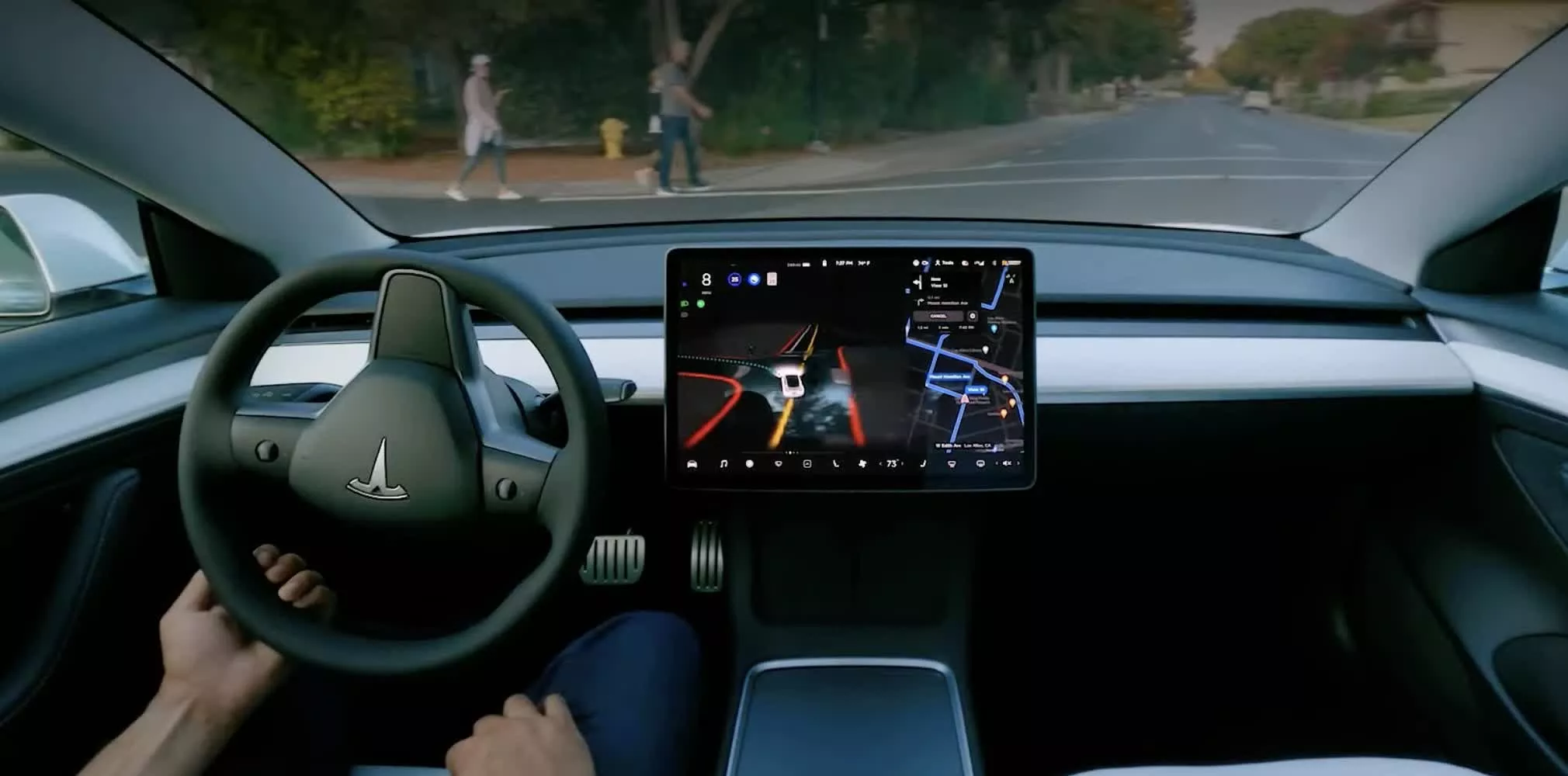
Crystal ball: The memory crisis is showing no signs of abating anytime soon, and the enormous demand for RAM could get even worse as driverless cars and robots become more advanced and widespread. Micron believes fully autonomous cars will need 300GB of DRAM or more, and robots will require somewhere around the same.
Micron CEO Sanjay Mehrotra made his prediction during the company's recent earnings call. He said that self-driving cars will represent a new segment that demands huge amounts of memory.
Mehrotra explained that today's average car has less than L2 ADAS (Advanced Driver-Assistance Systems) capability, containing approximately 16GB of DRAM.
There are six levels of ADAS. Level 0 has no automation, with the human doing all driving tasks, though warnings like lane departure alerts may still be present. Level 1 adds basic assistance such as adaptive cruise control or lane-keeping, while Level 2 can combine those features to handle steering and speed at the same time, but still requires the driver's full attention.
Level 3 allows the car to manage most driving in certain conditions, though the human must be ready to take over when asked. Level 4 goes further by enabling the vehicle to drive itself in specific environments or geofenced areas without human input, while Level 5 represents full automation in all conditions, with no driver needed at all.
Mehrotra said that vehicles with L4 autonomy will require over 300GB. He added that the company is already preparing to produce the industry's first automotive-grade 1γ LPDDR5 DRAM.
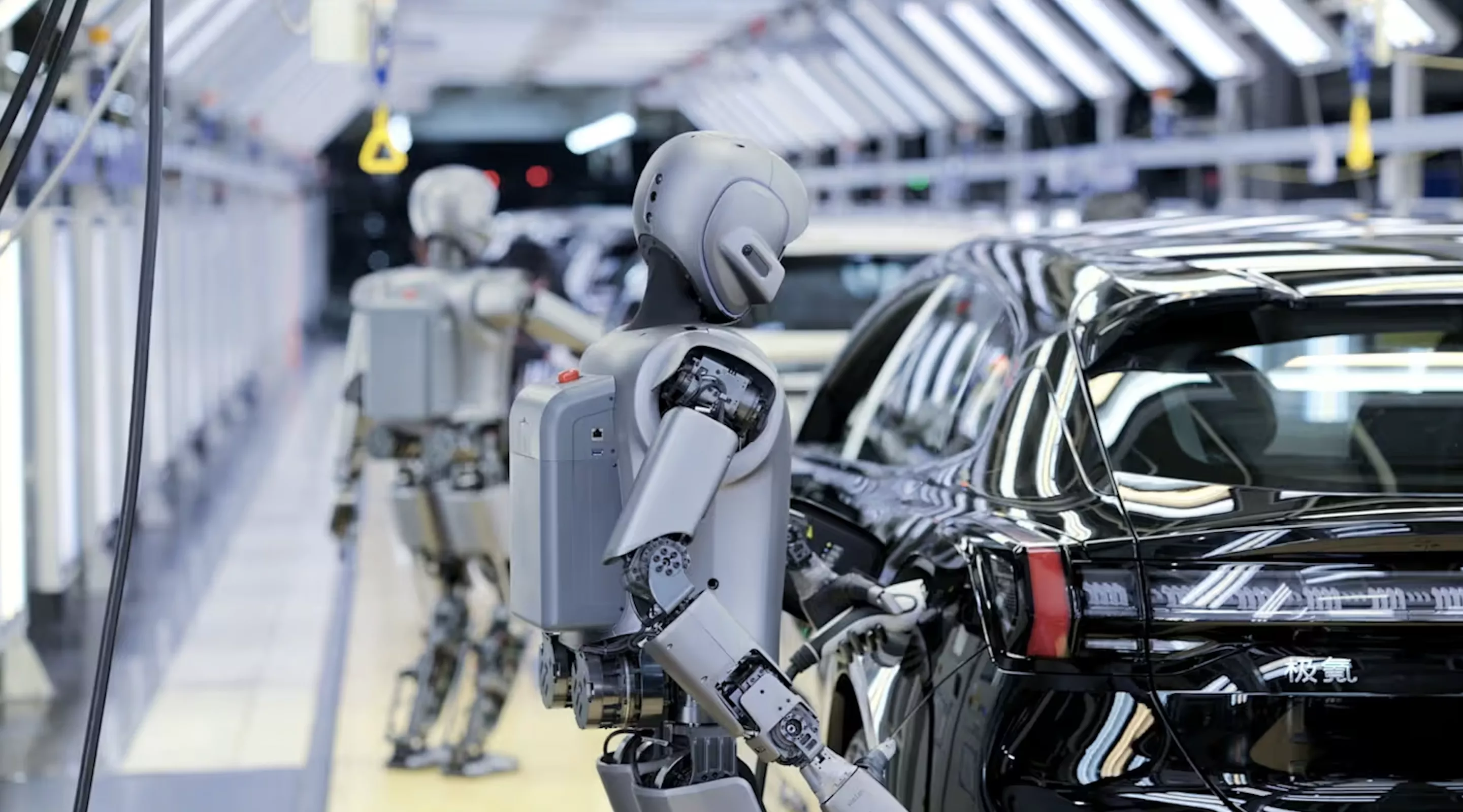
It's not just advanced self-driving vehicles that will be putting more pressure on the memory market. Robots and robotics are also becoming more advanced and widespread – Mehrotra believes we are on the cusp of a 20-year growth vector in this sector, and expects robotics to become one of the largest product categories in the technology world.
Because the robots will be AI-enabled, they will be powered by a compute platform comparable to that of a high-end L4-capable automobile, said Micron's boss, thereby requiring a similar amount of capacity.
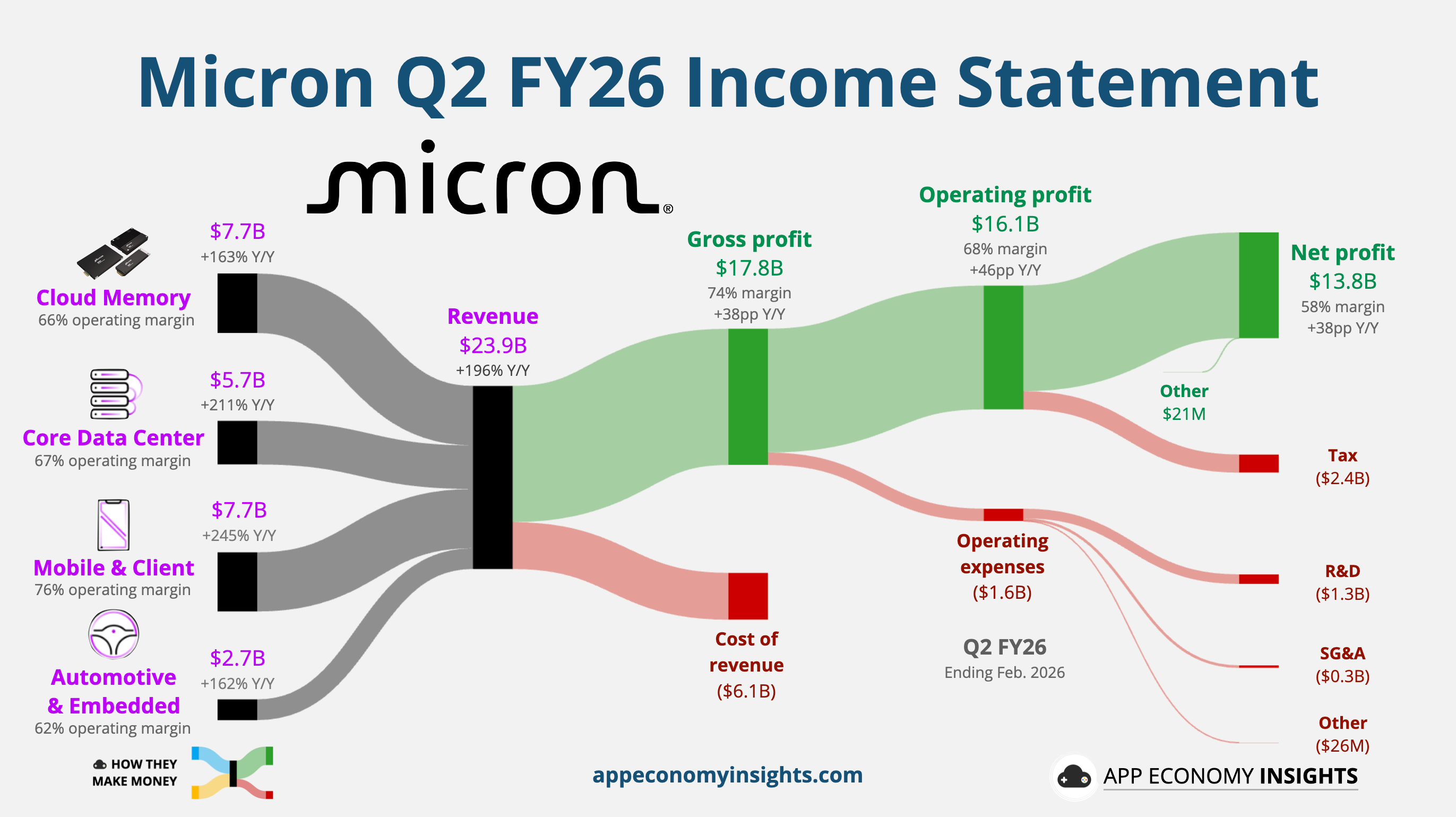
Data from App Economy Insights
The prospect of the memory crisis getting even worse due to these AI-powered technologies – particularly if robotics really is about to enter a "20-year growth vector" – is a depressing one for PC owners. But for Micron and others who make money from memory demand, it's a boom time.
Micron generated $23.86 billion in revenue during its financial second quarter, almost triple the $8.053 billion it reported one year ago. Net income, meanwhile, hit $13.8 billion, a 773% rise compared to the $1.58 billion it made during Q2 FY25.