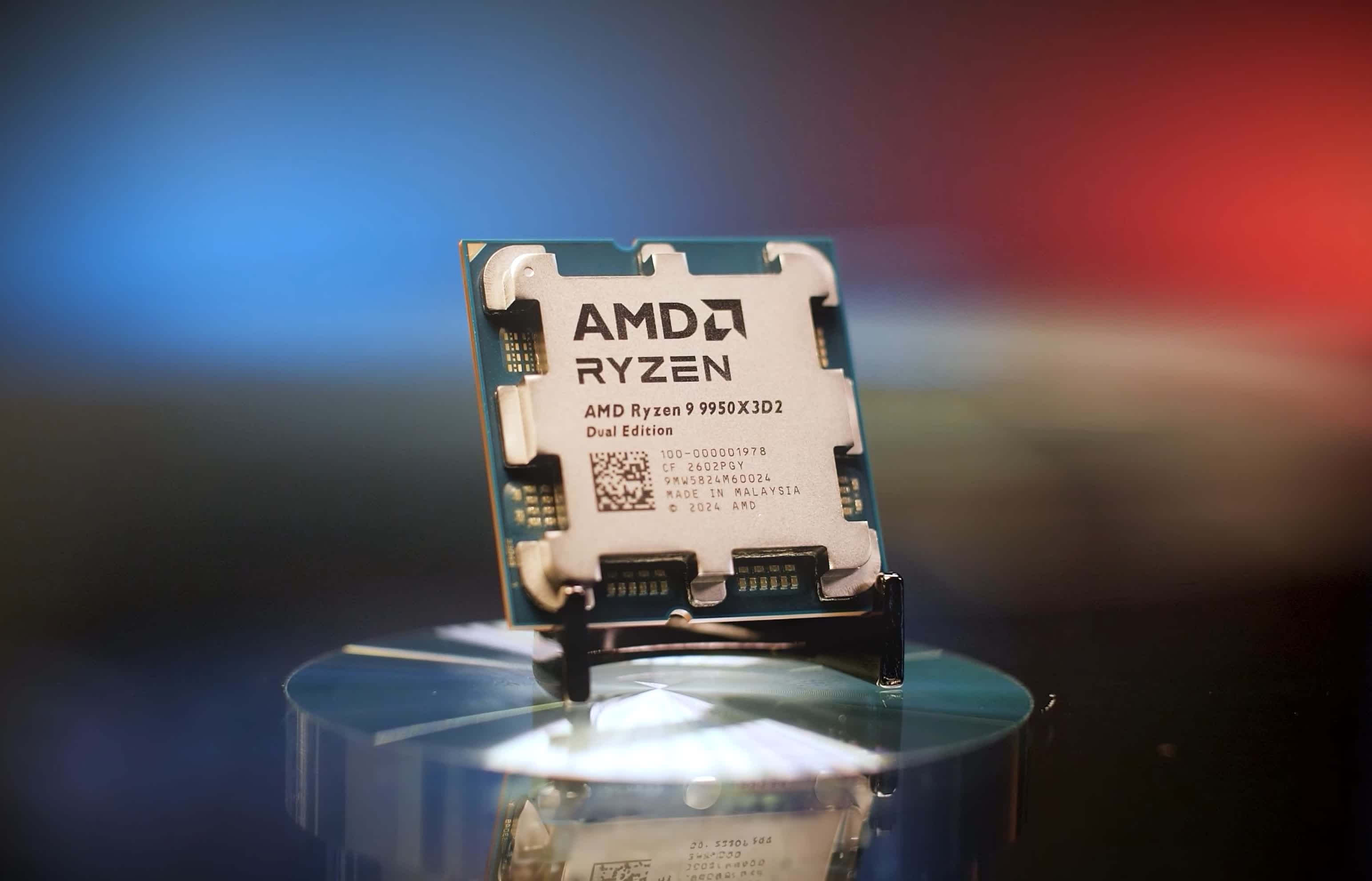
First look: AMD has expanded its Zen 5 lineup with the Ryzen 9 9950X3D2, the first desktop processor to feature 3D V-Cache on both chiplets. The move further tightens AMD's grip on the high-end gaming and productivity space. It also lands at a curious moment, just as reports surfaced that Intel has shelved its planned Core Ultra 9 290K Plus, a timing overlap some observers view as more calculated than coincidental.
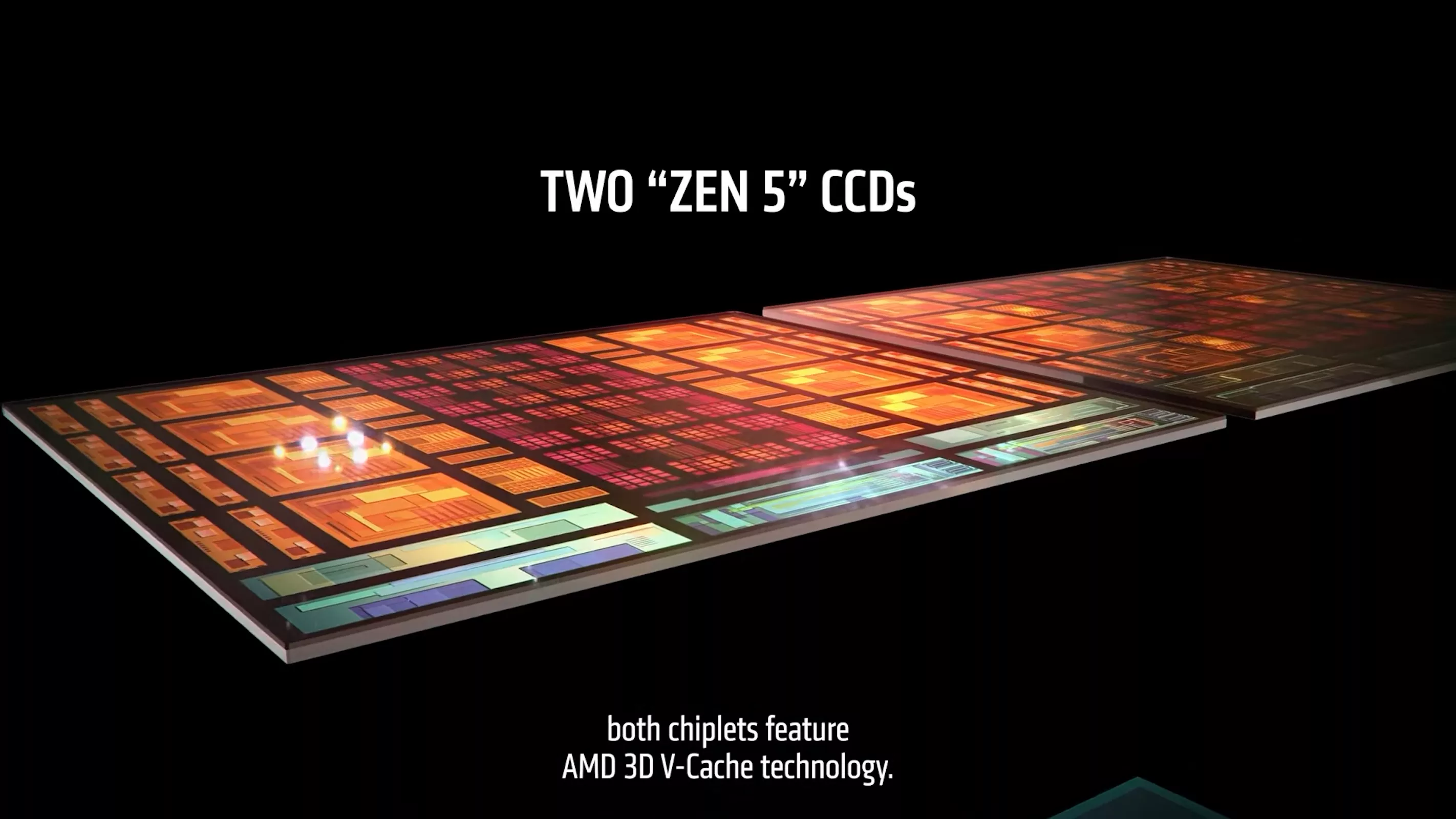
The Ryzen 9 9950X3D2 doubles down on AMD's V-Cache formula by equipping each of its two CCDs with stacked cache memory. The design results in a massive 208MB of total cache, a configuration that AMD claims can yield 5% to 10% faster performance in select rendering and content creation workloads compared to the Ryzen 9 9950X3D.
The chip will be available beginning April 22, though AMD has not yet disclosed pricing.
"208MB of cache means more game data, more assets and more working data sitting right next to the CPU cores," said Jack Huynh, AMD's Senior Vice President and General Manager of the Computing and Graphics Group, in the company's launch video. AMD positions this extra cache as a benefit for both gaming and creative workloads, including compiling game engines, running AI models, and rendering 3D objects
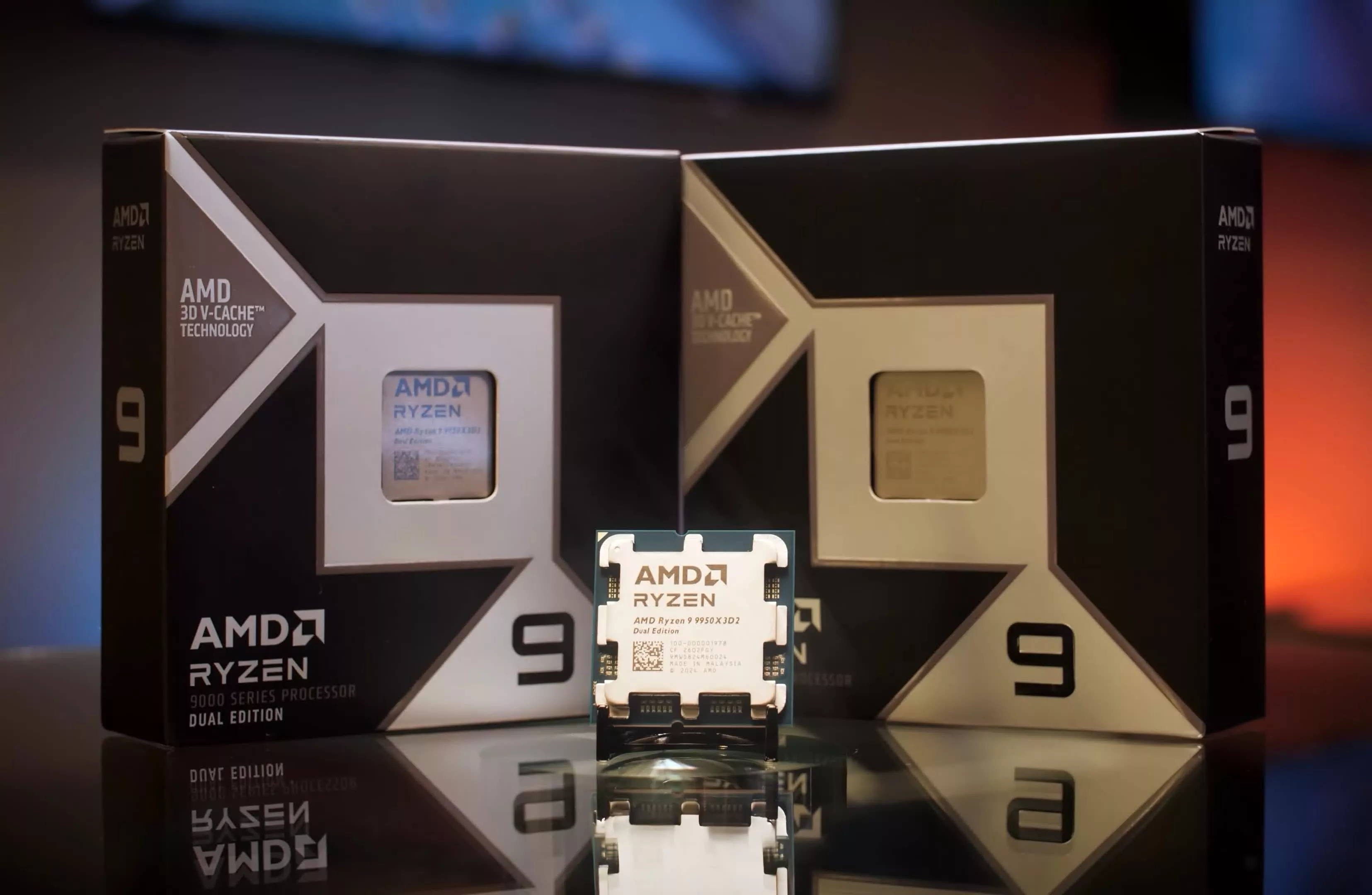
Like its predecessor, the 9950X3D2 is a 16-core, 32-thread CPU built on AMD's Zen 5 architecture, but it ups the total thermal design power to 200 watts – 30 watts higher than the previous version. The boost clock is slightly trimmed to 5.6 GHz, down from 5.7 GHz on the 9950X3D. As part of the AM5 ecosystem, the processor remains compatible with DDR5 memory, PCIe Gen 5, and Precision Boost Overdrive 2. The company is also releasing the chip in a monochrome "Dual Edition" box design to distinguish it from earlier models.
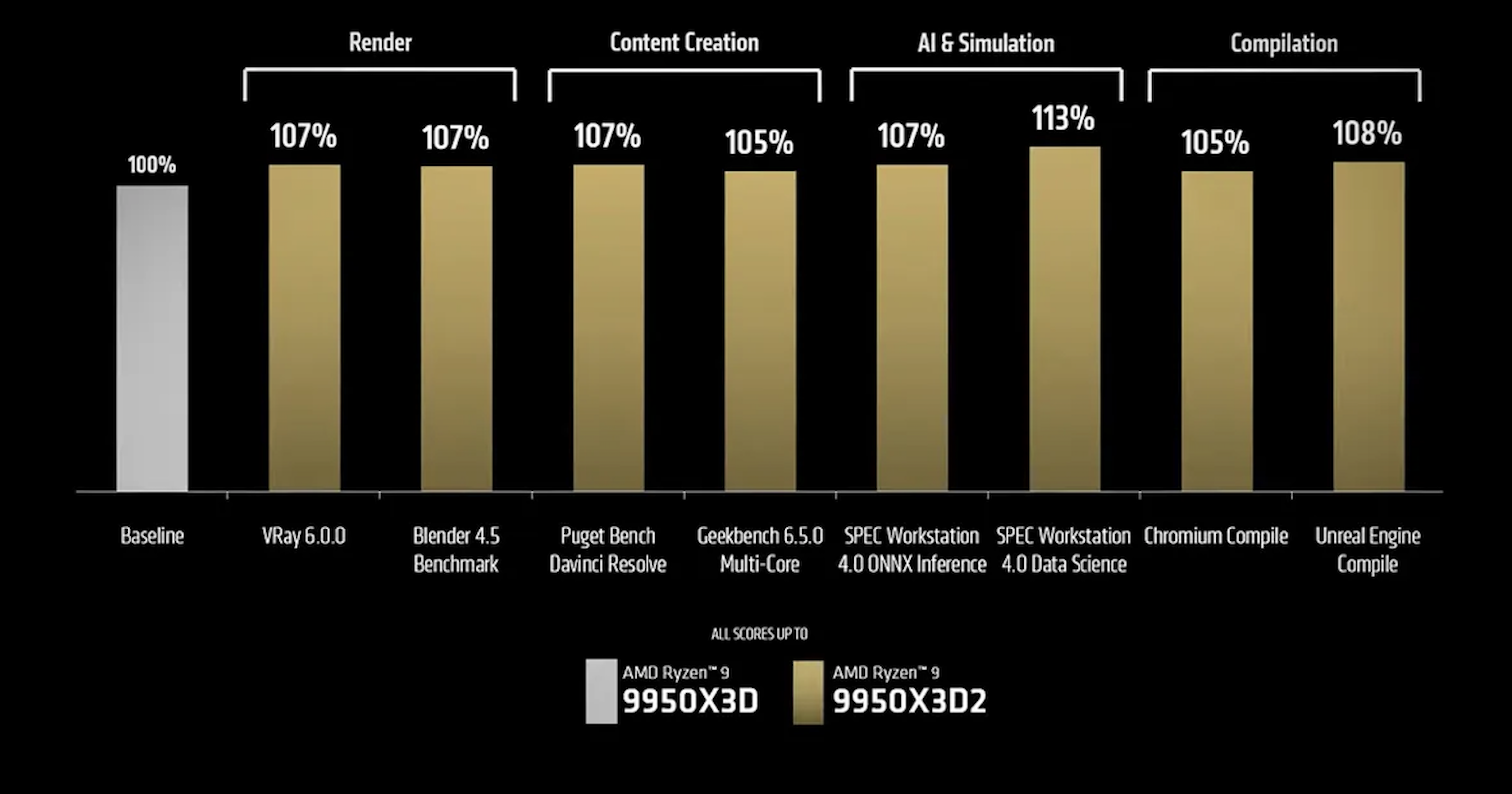
Performance projections show measurable improvements in specialized workloads. AMD says users can expect up to a 13% boost in AI and simulation tasks, roughly 7% better results in V-Ray and Blender rendering benchmarks, and 5% to 7% faster speeds in content creation tests such as Puget for DaVinci Resolve and Geekbench multi-core. The company did not share independent gaming benchmarks.
Behind the enthusiastic reception, commentators have noted the unusual timing of AMD's release. YouTube channel Moore's Law Is Dead suggested that AMD may have fast-tracked the launch following industry chatter about Intel's now-canceled Core Ultra 9 290K Plus.
While AMD has not addressed the speculation, the move highlights how fiercely competitive the high-end desktop CPU market is, where even small performance gains can influence what gamers and creators buy. For now, the Ryzen 9 9950X3D2 stands as AMD's most ambitious step yet in leveraging cache stacking to keep its CPUs at the top of the performance chart – and its timing ensures the spotlight stays squarely on Team Red.