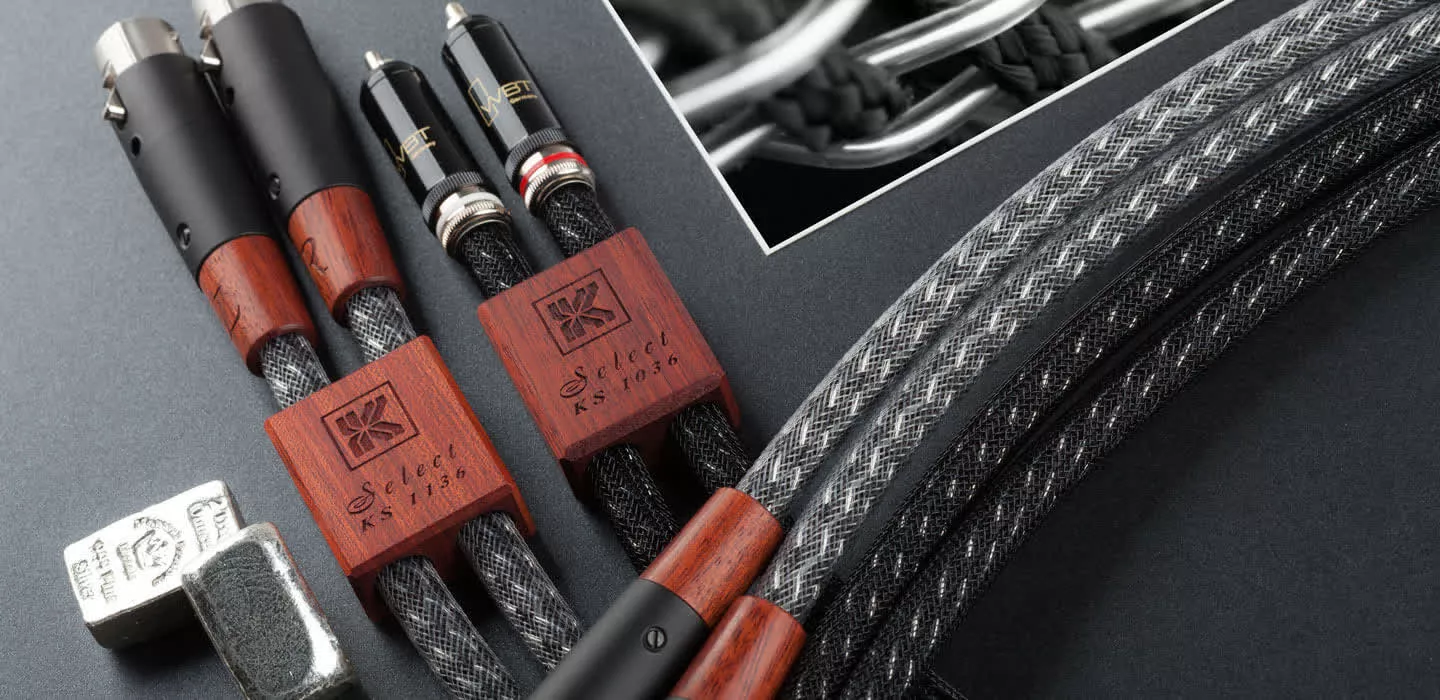
Facepalm: There's long been an argument among certain audiophiles that they can hear the difference between expensive and cheap audio cables even when others can't. But a YouTube video that tests $4,000 RCA cables against $7 Amazon Basics alternatives shows why some people are throwing away money.
YouTube channel Audio Science Review compares Kimber's boutique KS 1036 interconnects with a battered Amazon Basics cable that host Amir says he's used for years without issue.
Right away, the expensive option starts losing points. Amir mocks the unnecessary Pelican-style case, questions the value of its locking RCA connectors, and notes that one removable part can be lost altogether, potentially making the cable useless. He also notes that the Kimber connection proved less stable when wiggled than the dirt-cheap Amazon cable.
Using an Audio Precision analyzer, Amir ran a series of measurements designed to expose any real-world advantage the Kimber cable might have. There were none.
With a 1kHz sine wave at 4 volts RMS, both cables showed the same vanishingly low distortion. Frequency response from 10Hz to 200kHz was effectively identical, phase response matched, and even square-wave rise-time tests overlapped.
Amir also tried a more punishing digital-style stress test by using both RCA cables as coaxial S/PDIF links. The Amazon cable showed a tiny increase in jitter, but only in the picosecond, despite being longer than the Kimber sample.
Also read: This SSD for audiophiles sounds suspicious
The host's conclusion was that for practical purposes, both behaved the same as the analyzer's own internal loopback wiring.
That result makes the Kimber cable's marketing even harder to swallow. It boasts of six "Black Pearl" silver conductors drawn through diamond-coated dies, plus claims of "silent backdrops," "vivid tonal color," and the "soul of the performance." Impressive claims, but the measurements don't back any of it up.
The video's most useful point wasn't really about cables – it was about listeners. Amir admits that when swapping gear normally, he often thinks he hears tighter bass, more detail, or a quieter background. But he argues that expectation bias and sighted listening are the big factors. Blind testing, repeated enough times to rule out lucky guesses, is where those differences disappear.
Cheap junk cables do exist, of course, and some poorly designed high-end cables can even introduce more noise. But as this comparison shows, once you clear the very low bar of basic competence, spending thousands on analog interconnects is less about achieving audio perfection and more like financing fancy packaging. If there's a sure-fire way that a company can justify selling everyday hardware for a high price, it's by marketing it at audiophiles.