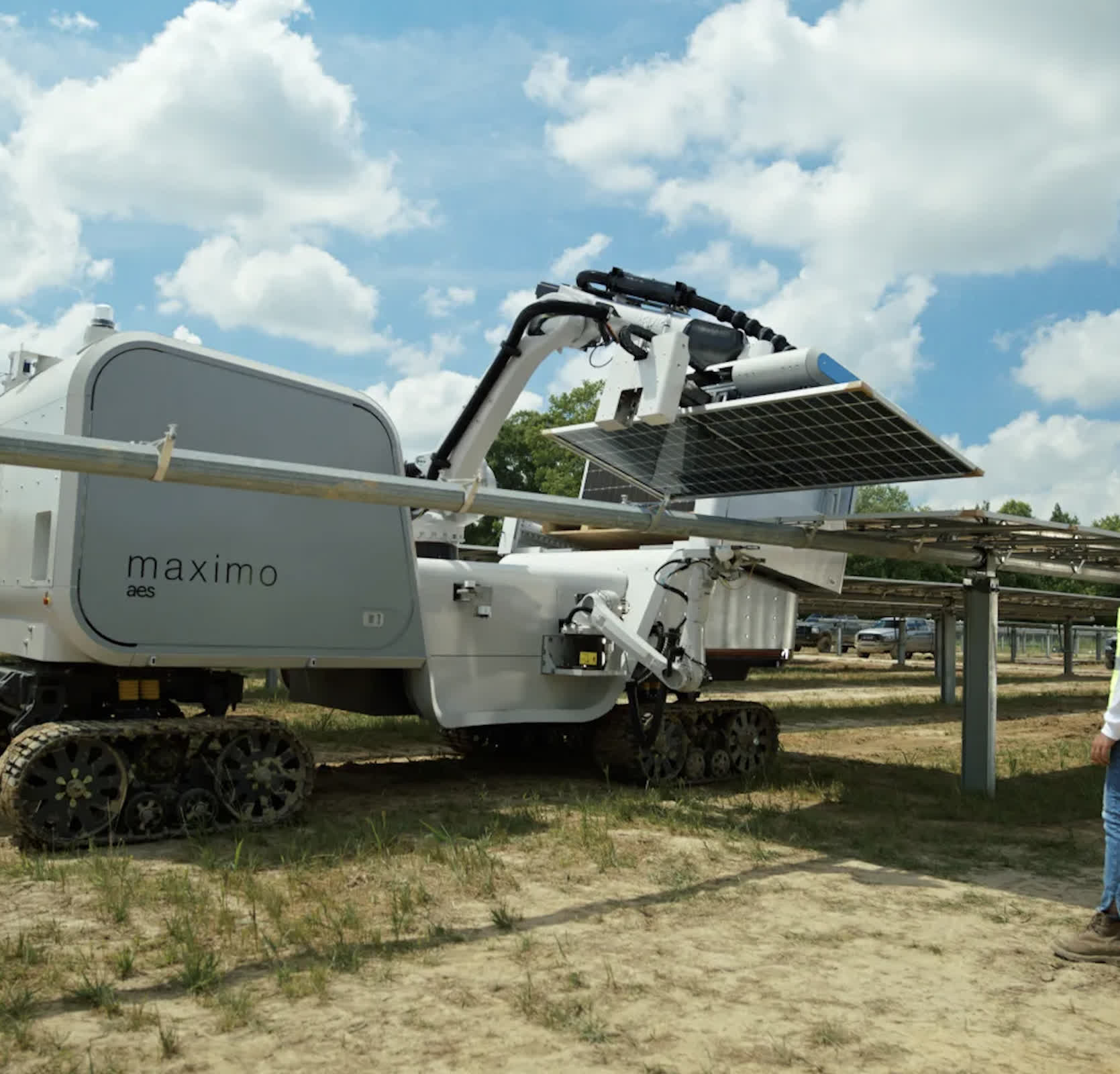
The takeaway: The expansion of automation in renewable energy construction has taken a significant step forward in California's Mojave Desert, where a fleet of Maximo robots has completed the installation of 100 megawatts of solar capacity at AES's Bellefield solar complex – one of the largest demonstrations to date of field robotics operating at utility scale. The project marks a shift for solar construction, an industry traditionally dependent on manual labor.
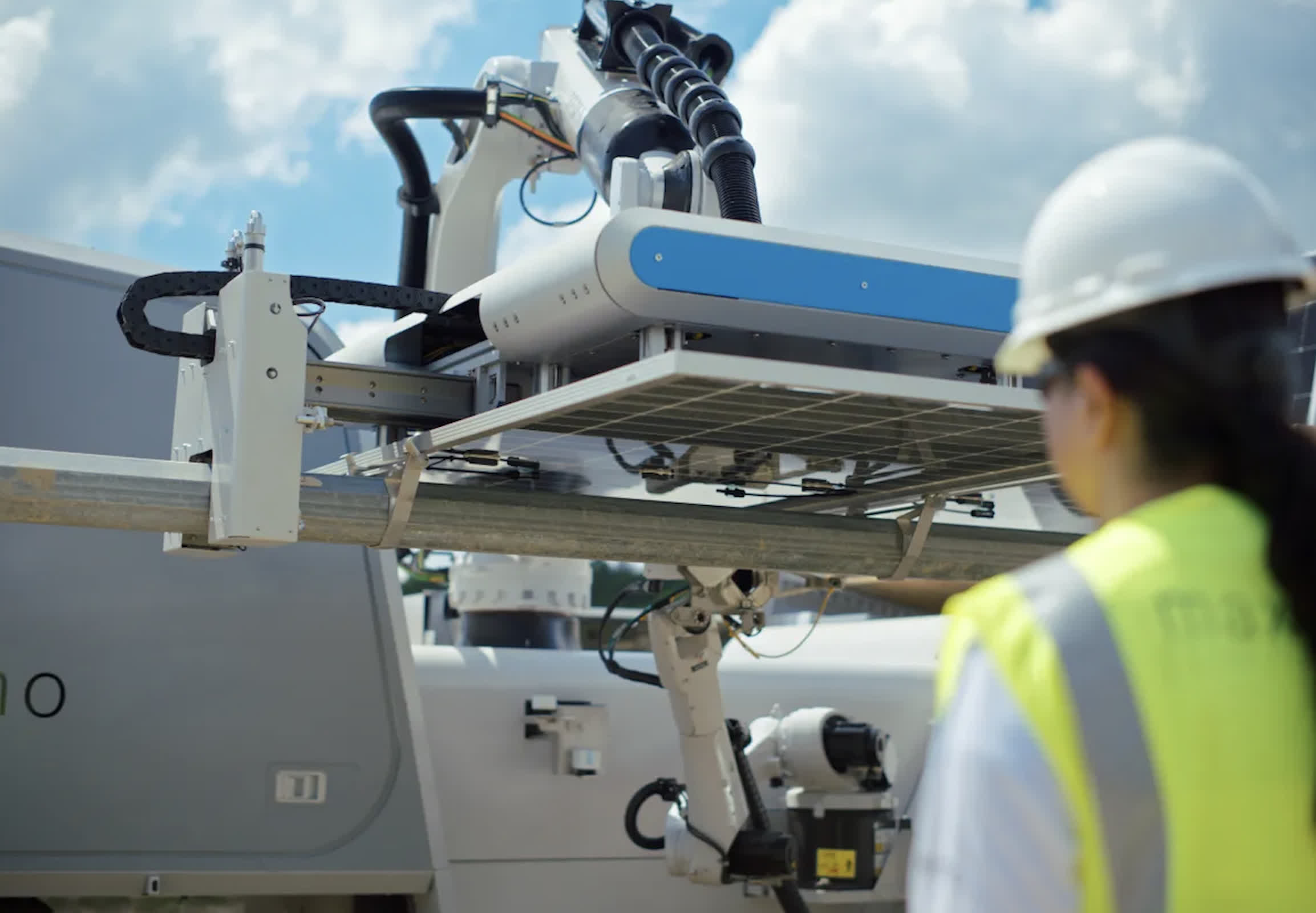
According to Maximo, its Version 3.0 robots now enable crews to install solar panels at rates previously impossible by human teams alone. Workers using the robots have been able to place as many as 24 photovoltaic modules per hour per person, supported by machines that assemble panels at a rate of more than one per minute. This pace – nearly doubling throughput compared with other large-scale photovoltaic sites across Southern California – highlights the growing role of robotics in a process that has long been labor-intensive.
"Reaching 100 MW is an important milestone for Maximo and for the role robotics can play in solar construction," said Chris Shelton, president of Maximo. "It demonstrates that field robotics can move beyond experimentation and deliver consistent results at utility scale."
For Maximo, the Bellefield deployment also demonstrates how industrial AI systems can accelerate robotics development. The company built and refined its robotic models using Nvidia and Amazon Web Services cloud technologies. By leveraging Nvidia's AI infrastructure, Omniverse simulation libraries, and the Isaac Sim robotics development platform, engineers were able to digitally model and stress-test robot movements before deploying updates to live sites. According to Maximo, this approach has shortened development cycles and improved performance confidence across its growing robotic fleet.
The Bellefield complex, which will eventually exceed 1 gigawatt of generation capacity, is part of a wave of large-scale solar and storage projects across the American Southwest. These developments are arriving at a moment of heightened urgency for energy diversification.
With energy markets still rattled by the ongoing Middle East conflict and depleted fossil fuel supplies, the need for reliable, carbon-free generation has become acute, especially as new data centers and electric vehicle infrastructure place additional pressure on the grid.
This convergence of rising energy demand and industrial labor shortages has made automation particularly attractive to developers. Construction remains one of the most labor-constrained sectors in the US, prompting growing interest in robotics platforms that can supplement human workforces while improving throughput and consistency.
Maximo's achievement offers a glimpse of what widespread robotic integration could mean – not just for renewable energy projects, but for heavy construction more broadly.