Through the looking glass: Apple turned 50 this week as a multi-trillion-dollar platform company built around the iPhone, the most successful product ever made, along with laptops, tablets, smartwatches, audio gear, and a multitude of digital services. But it all began as a bare circuit board passed around a hobbyist club in Silicon Valley.
Across those five decades, Apple has repeatedly redefined what a personal computer looks like, from beige boxes and Bondi Blue CRTs to fanless ultraportables and super powerful handhelds.
The Apple-1, designed by Steve Wozniak and sold through stores like Byte Shop, arrived as a fully assembled board powered by a MOS Technology 6502 processor and 4 KB of memory. It lacked a case, keyboard, or power supply, and users had to load Integer BASIC from cassette.
Wozniak demonstrated the system at the Homebrew Computer Club, where its appeal was straightforward: the hardest part – the board – was already built and tested. At a time when personal computing often meant soldering every connection by hand, that was a meaningful step forward.
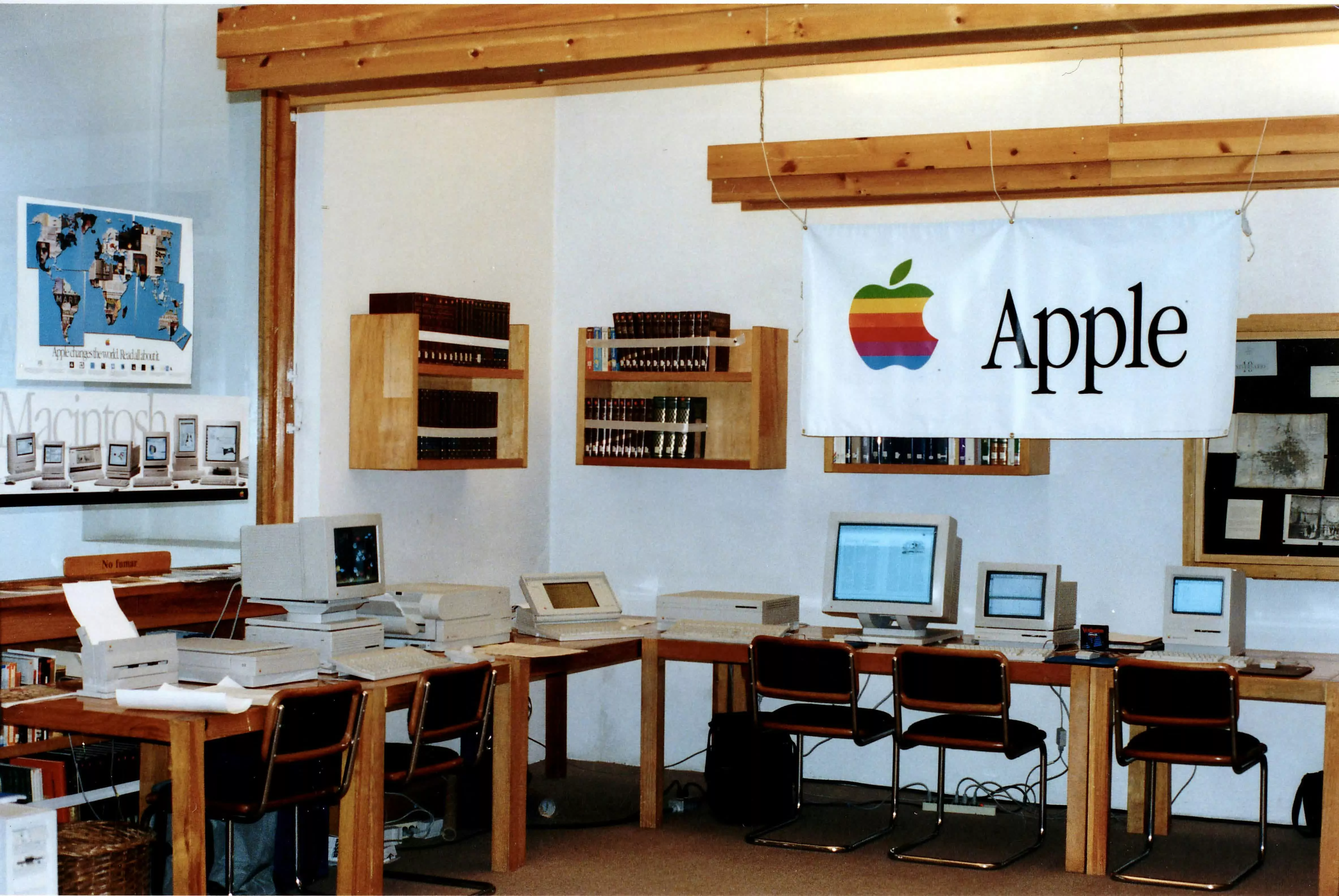
The Apple II, launched in 1977, expanded that idea to a broader audience by packaging the board, keyboard, and plastic case into a single unit that could use a television as its display and shipped with BASIC in ROM. Paired with a floppy drive and VisiCalc, the influential early spreadsheet, the Apple II became a mass-market success and gave the young company the cash flow to scale.
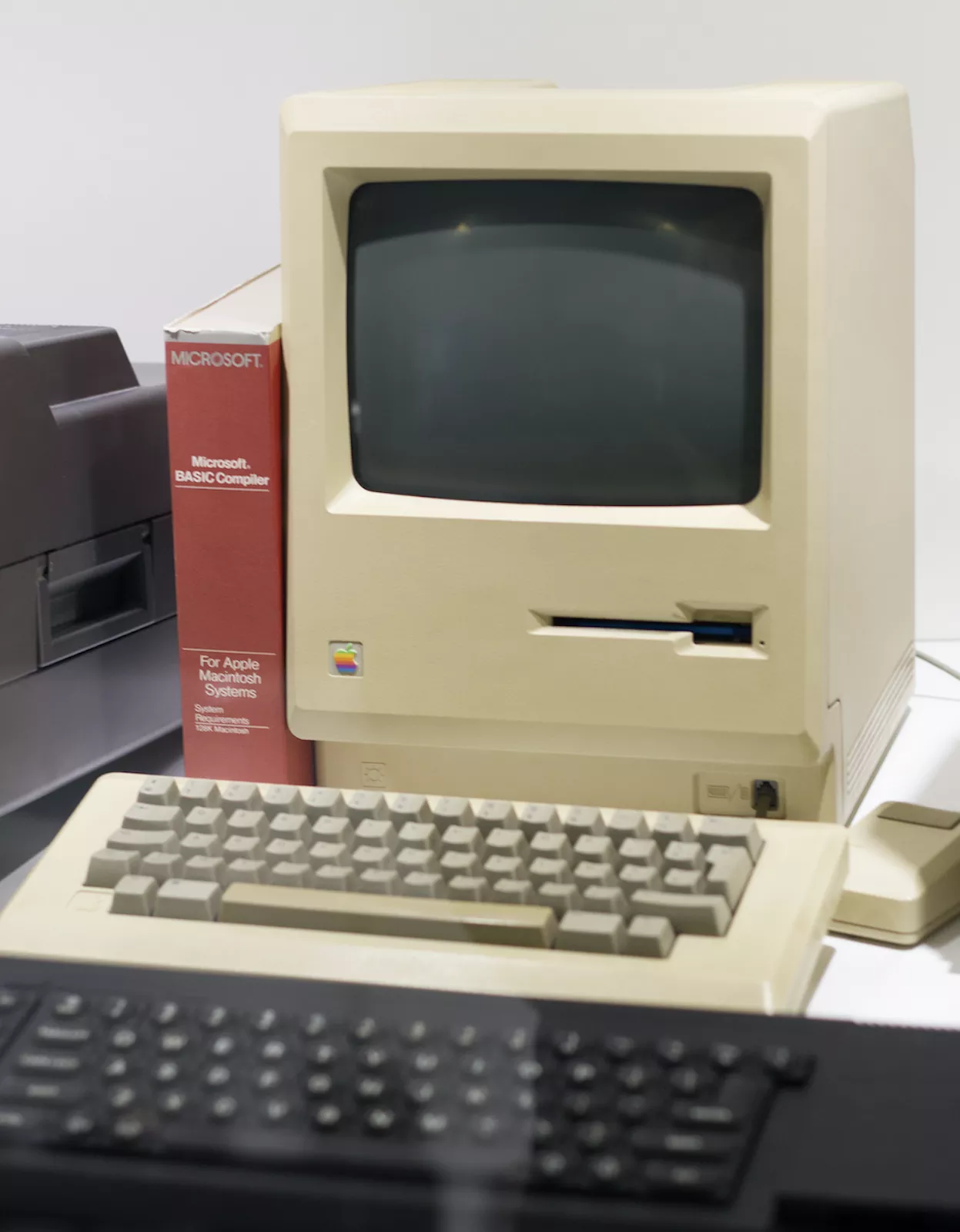
In 1984, the original Macintosh brought graphical user interfaces and the mouse – concepts developed at Xerox PARC – to consumers, with Apple marketing it as a system that could be learned in "only a few hours." Its compact all-in-one design, 8 MHz processor, 128 KB of RAM, and 400 KB floppy drive introduced icons, menus, and copy-and-paste to a wider audience at a starting price of $2,495, roughly $8,000 today.
The Macintosh – and its refinements through the 1980s – cemented graphical computing as central to Apple's identity. The decade also saw products like the LaserWriter, one of the first mass-market laser printers, helping establish the desktop publishing ecosystem around the Mac.
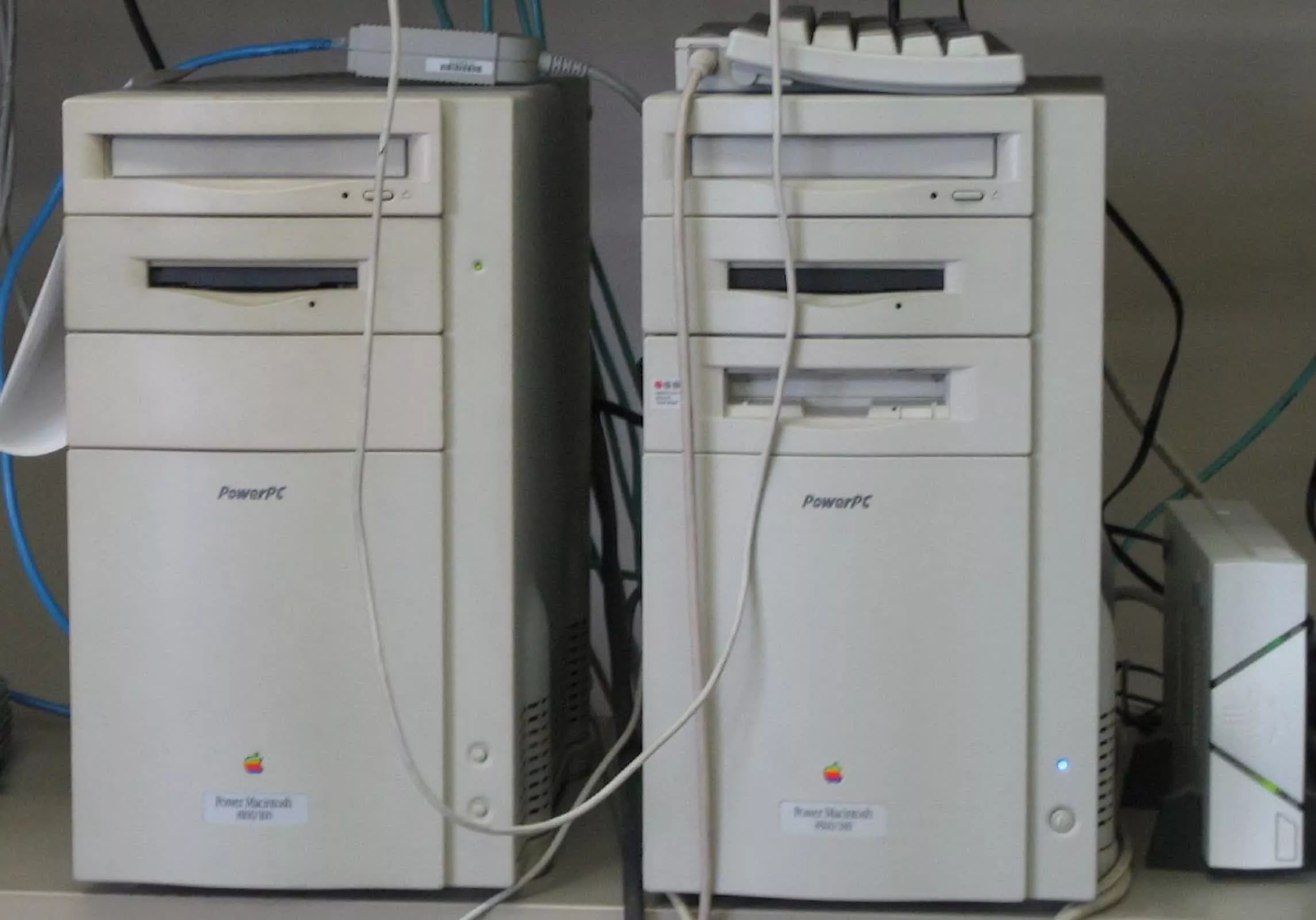
Apple's 1990s story is often framed as drift followed by a reset – and the reset proved more important for the platform than any single device. The company experimented with products like the Newton, QuickTake, and Pippin, but the defining moment came in 1997, when Steve Jobs returned through the acquisition of NeXT.
That deal brought Jobs back to the executive suite and introduced NeXTSTEP, a Unix-based operating system that evolved into Mac OS X and later macOS, which still underpins Apple's platforms today. Jobs quickly simplified the product lineup and launched a design-led revival with the colorful iMac in 1998.
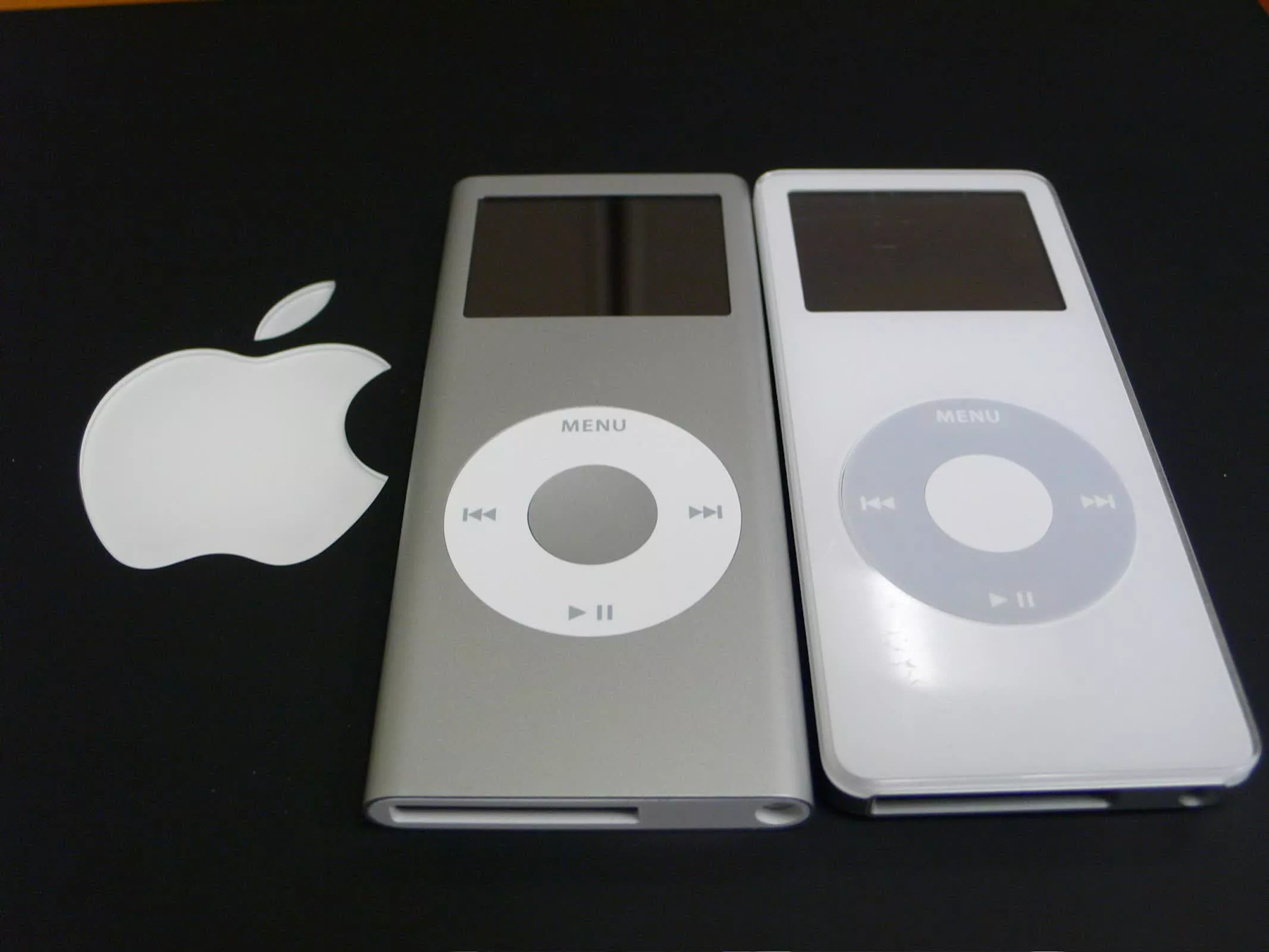
The 2000s repositioned Apple as a consumer electronics powerhouse. The iPod debuted in 2001 with the promise of "1,000 songs in your pocket," and the third-generation model in 2003 added Windows support – an important shift that helped turn it into one of the defining devices of its era.
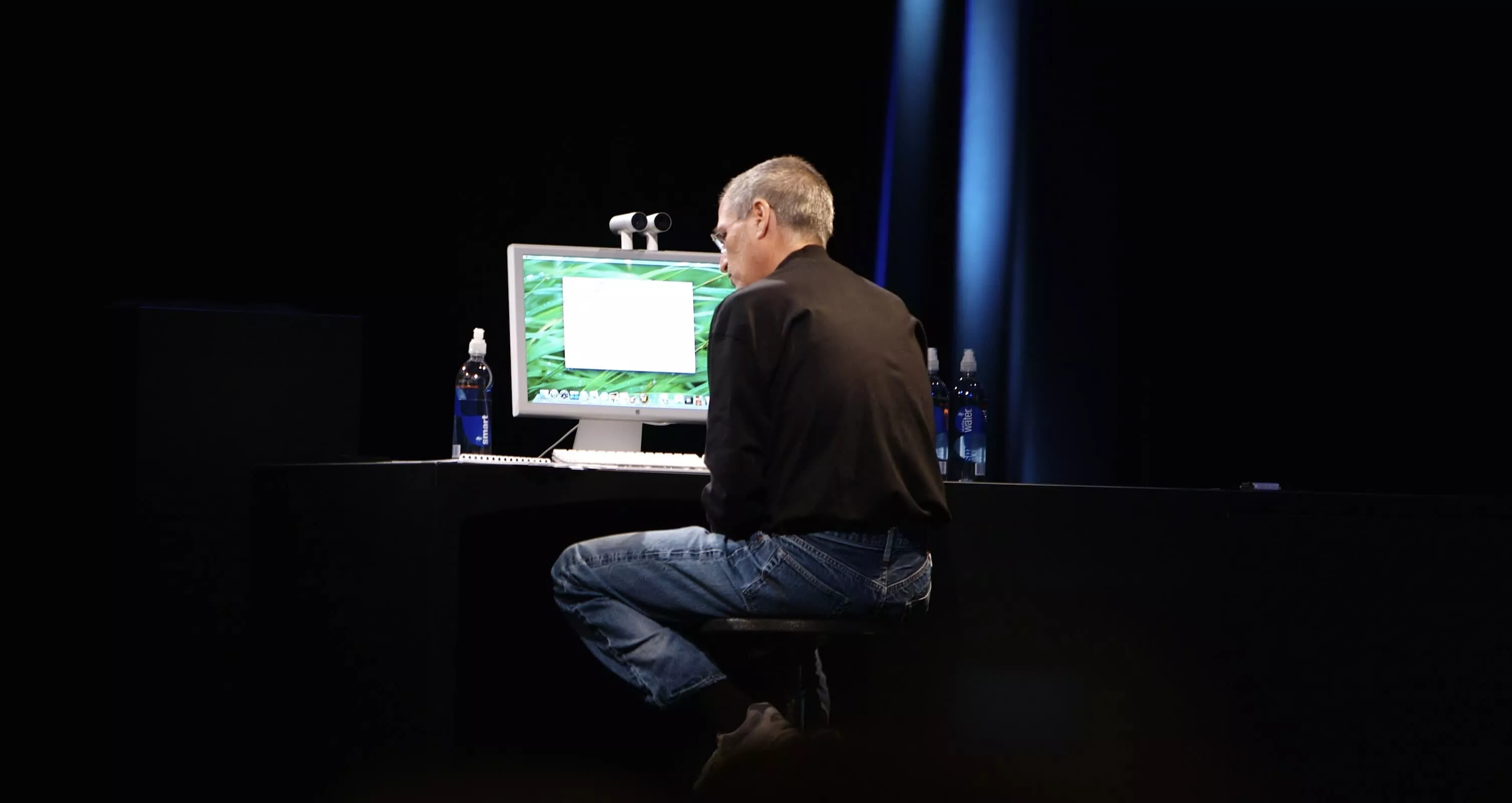
In 2007, Jobs took the stage at Macworld San Francisco and introduced the iPhone as three devices in one: "a widescreen iPod with touch controls, a revolutionary mobile phone, and a breakthrough internet communications device."
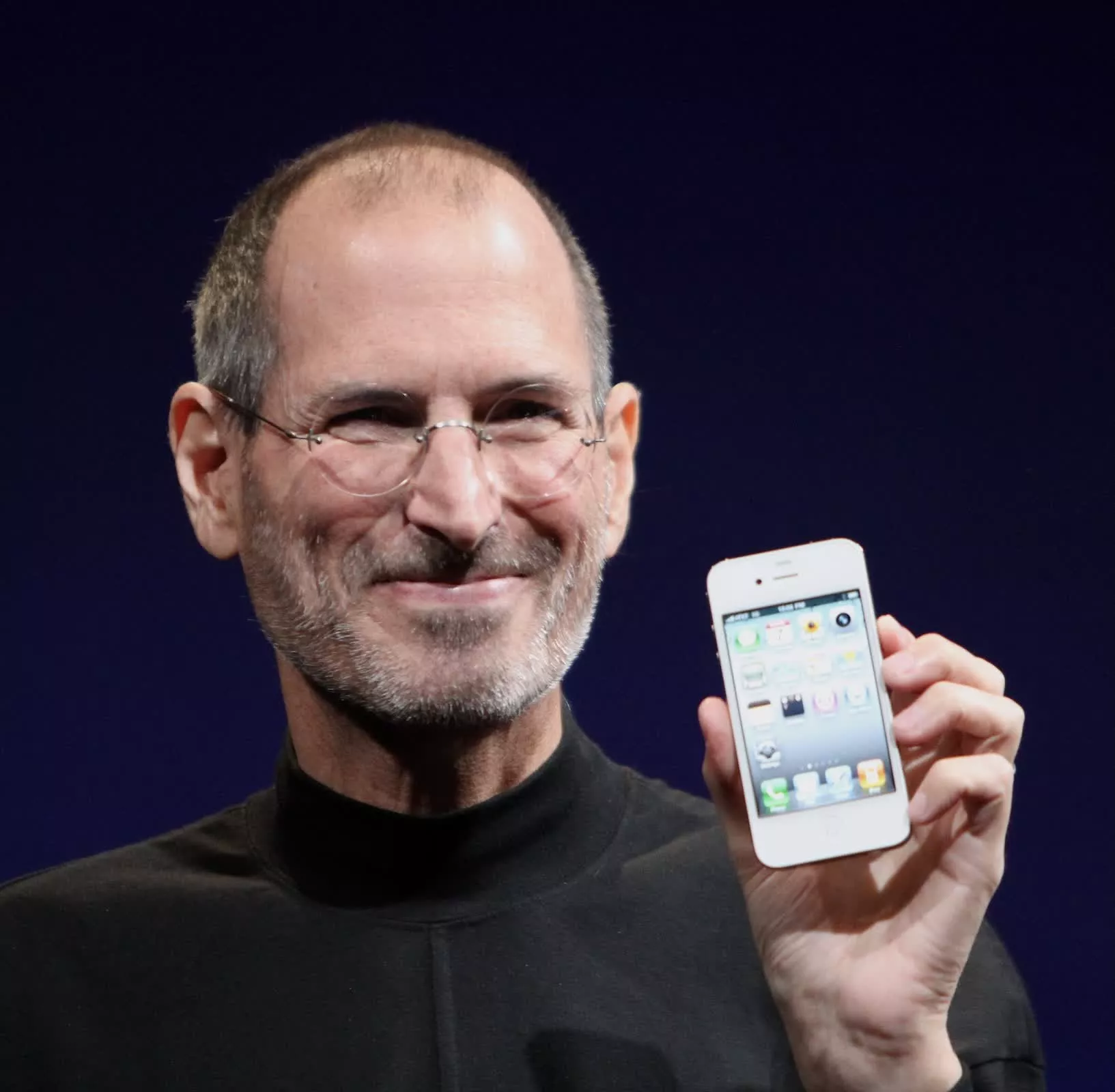
The reveal redefined the smartphone market. By 2025, Apple said it had shipped three billion iPhones, while building a services ecosystem around the App Store, iCloud, Apple Music, and Apple Pay.
For Mac users, another inflection point came with the MacBook Air. The original 2008 model, built on Intel's Core 2 Duo and priced from $1,799 with an 80 GB hard drive, was far from mainstream – but when Jobs slid it out of a manila envelope on stage, the message was clear: thin and light would define the future of notebooks.
After several incremental Intel refreshes – and a brief detour into the Touch Bar – the Air became one of the first Macs to adopt Apple's in-house M1 system-on-a-chip. That shift helped position Apple silicon as a practical upgrade rather than a risky architectural experiment.
That transition, formally announced in 2020 and completed in 2023 with the Mac Pro's move to the M2 Ultra, has given Apple a sustained performance-per-watt advantage and tighter integration between hardware and software.

More recently, the Apple Vision Pro has introduced Apple's take on "spatial computing," while the Apple Watch and AirPods have pushed wearables into the mainstream. Apple frequently points to features like ECG, Crash Detection, and Fall Detection as examples of technology with real-world impact.
Looking ahead, Apple is expected to push further into AI-centric wearables, including smart glasses, possibly camera-equipped AirPods, and even pendant-style devices.
The 50-year milestone is also being marked beyond Cupertino. The Mimms Museum of Technology and Art in Roswell, Georgia, is opening an exhibit titled "iNSPIRE: 50 Years of Innovation from Apple," described as the world's largest public collection of Apple hardware, with more than 2,000 artifacts spanning roughly 20,000 square feet.
The Computer History Museum in Mountain View is hosting its own programming around Apple's legacy, and Apple itself has organized concerts and performances at its stores worldwide.
Taken together, the celebrations highlight just how far Apple has traveled from the days when Wozniak showed off a bare board at a club meeting and invited people to tinker.