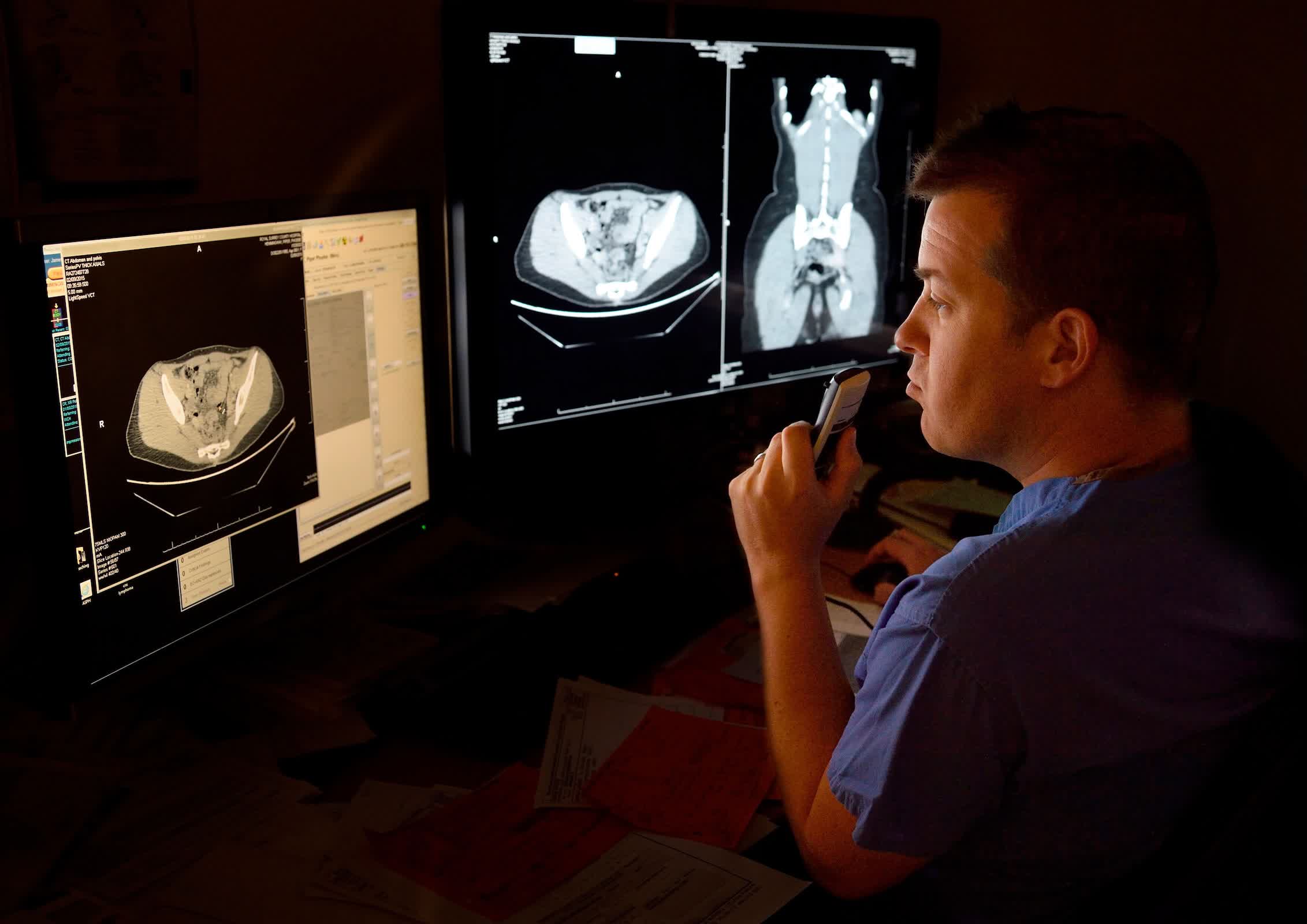
Big quote: Artificial intelligence is edging closer to a formal role in medical imaging, and one of the country's most prominent hospital executives says he's ready to take that step – once regulators do. During a health care leadership panel hosted by Crain's New York Business, Dr. Mitchell H. Katz, president and CEO of NYC Health + Hospitals, said his organization could substitute AI for human radiologists in many cases if policy barriers were eased.
"We could replace a great deal of radiologists with AI at this moment, if we are ready to do the regulatory challenge," Katz told participants.
The nation's largest public hospital system already uses AI to help interpret some images, and Katz sees the technology as a practical way to expand access to screenings and reduce costs.
Katz, an internal medicine specialist who has led the 11-hospital network since 2018, said automated imaging systems are already being used for mammograms and X-rays. He argued that allowing the technology to handle initial reads – particularly for breast cancer screening – could deliver "major savings" while ensuring that radiologists focus on confirming abnormal results or handling complex cases.
The remarks reflect a growing debate in medical imaging, where AI's capability to interpret scans more quickly than humans collides with unresolved questions about safety, liability, and oversight. Health systems across the country are testing AI tools in radiology, but most operate under strict supervision by licensed professionals.
Dr. David Lubarsky, CEO of the Westchester Medical Center Health Network and a fellow panelist, said his system has already seen encouraging outcomes with similar tools. "The AI Westchester uses misses very few breast cancers and is actually better than human beings," Lubarsky said. For lower-risk patients, he noted, "if the test comes back negative, it's wrong only about 3 times out of 10,000."
Katz pressed his peers on whether New York's regulatory framework should evolve to permit AI-led reads "without a radiologist," with clinicians stepping in primarily to review any unusual findings. Dr. Sandra Scott, CEO of One Brooklyn Health, agreed. Running a small safety-net hospital, Scott told the panel the change could help financially strained facilities stay afloat. "I mean, I'm in charge of a safety-net institution. It would be a game-changer," she said.
The discussion showed how economic pressures are pushing the conversation forward. Radiologists have become increasingly expensive amid rising imaging demand and physician shortages, leaving many health systems searching for ways to be more efficient.
Not everyone in the field shares Katz's optimism. Some radiologists have pushed back strongly against the notion that AI can independently perform core diagnostic functions. Among the critics is Dr. Mohammed Suhail, a San Diego-based radiologist with North Coast Imaging. In an interview with Radiology Business, he sharply criticized Katz's remarks, arguing that hospital leaders risk patient safety by putting too much faith in unproven AI systems.
He said that allowing machines to handle image reads without human oversight could lead to serious harm. "Any attempt to implement AI-only reads would immediately result in patient harm and death, and only someone with zero understanding of radiology would say something so naive," he said, adding that hospitals are often willing to prioritize cost savings over safety as long as regulations allow it.
As hospitals and vendors tout AI's promise, the divide over its readiness remains stark. While Katz and others see a path toward scalable automation, critics argue that the risks – both medical and ethical – still outweigh those potential savings. For now, any step toward AI-led radiology will depend not just on technology but also on whether lawmakers and regulators decide the machines are ready to take the first read.