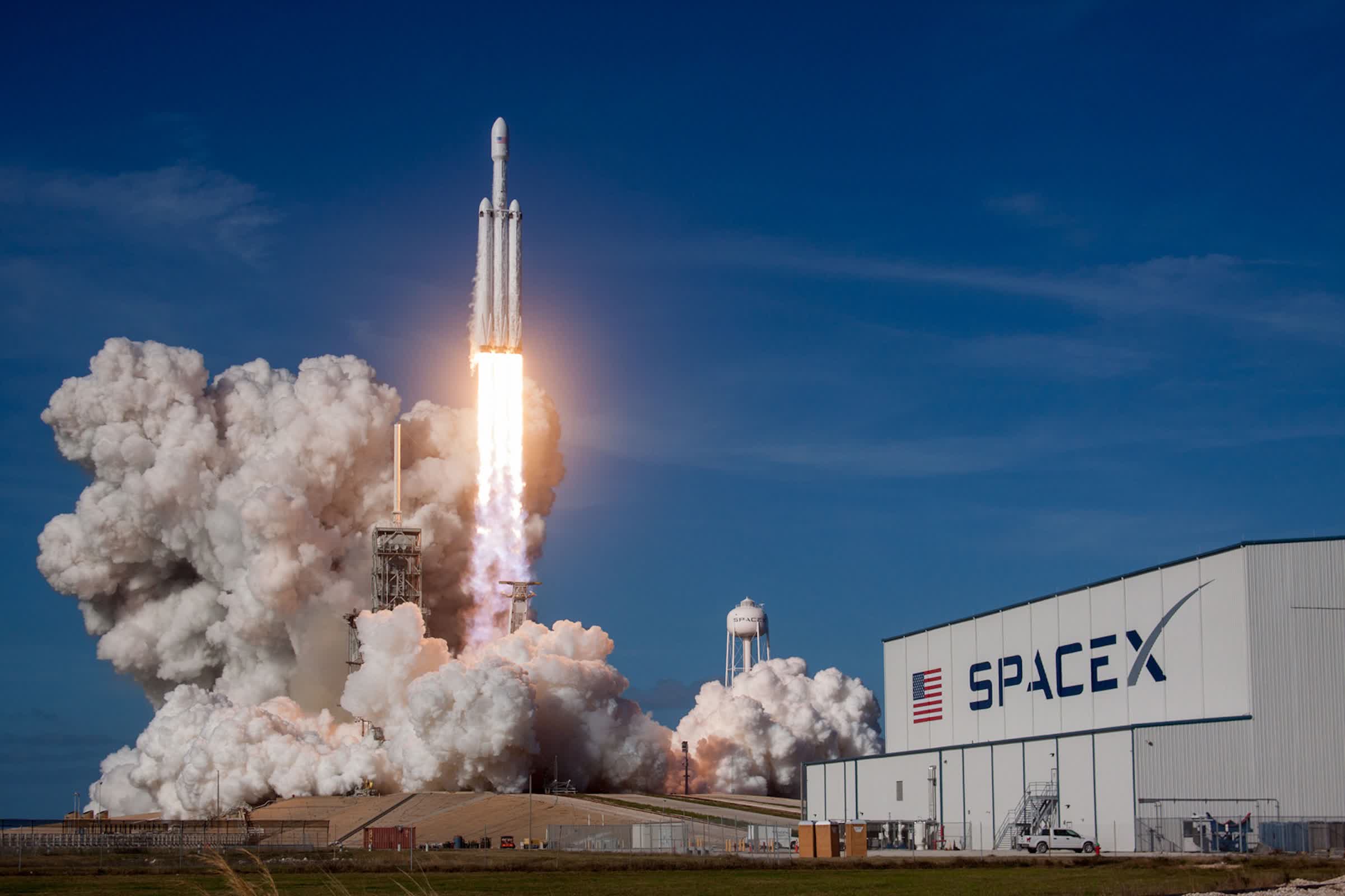
What just happened? Elon Musk's SpaceX is preparing to test whether public markets are ready to treat a private space and AI conglomerate like a megacap tech platform. The company has submitted a confidential registration for an initial public offering, positioning SpaceX for a possible June debut and what could be the largest stock sale on record.
The people, who asked not to be identified because the details are private, said SpaceX could seek a valuation above $1.75 trillion, eclipsing Saudi Aramco's 2019 IPO as the biggest to date.
The filing follows SpaceX's acquisition of Musk's artificial intelligence startup xAI in a transaction that valued the combined business at about $1.25 trillion. Through that deal, the rocket, satellite and AI group now also encompasses X. The result is an entity that spans orbital launch, broadband infrastructure, social media, and generative AI, giving investors a rare way to buy exposure across several of the most capital-intensive arenas in tech.
People familiar with the plans told Bloomberg the offering could raise as much as $75 billion, a scale that would dwarf every prior IPO and, in the view of some existing shareholders, "easily" set a new record. Gene Munster, managing partner at SpaceX investor Deepwater Asset Management, told The Washington Post the deal could bring in more than $80 billion. He said "the narrative around space is that it's early and they've got the pole position," adding, "I could see it go vertical right out of the gate."
Behind the scenes, SpaceX is assembling an unusually broad banking syndicate and preparing a global retail push. A person familiar with the deal told Bloomberg that the company is considering allocating as much as 30% of the offering to individual investors and may adopt a dual-class share structure that would give insiders such as Musk enhanced voting power.
Munster said that SpaceX's mix of businesses – from satellite internet and data centers to exploration missions – is likely to appeal to both institutions and retail traders drawn to high-growth stories. Shay Boloor, chief market strategist at Futurum, told The Washington Post that SpaceX had grown too large to remain private and is now a peer of tech giants like Google, Amazon and Microsoft. "Being able to participate in the leader of the space economy, and an Elon company combined with that, generates an unknown multiple," he said.
The IPO also lands at a moment when Musk's ambitions for the company are shifting but remain expansive. SpaceX, founded in 2002, is already the dominant commercial launch provider through its Falcon 9 rocket and leads the low-Earth-orbit broadband market via its Starlink constellation, which together are expected to generate close to $20 billion in revenue in 2026, with xAI contributing under $1 billion.
SpaceX boasts that its next-generation Starship vehicle is intended "to carry both crew and cargo to Earth orbit, the Moon, Mars and beyond" and is "the world's most powerful launch vehicle ever developed."

Yet Musk has recently recalibrated timelines for deep-space milestones. After tensions with Transportation Secretary and acting NASA administrator Sean P. Duffy over the pace of progress on a crewed lunar mission, Musk said this year that SpaceX would prioritize building a large-scale presence on the Moon before fully pivoting to Mars.
"For those unaware, SpaceX has already shifted focus to building a self-growing city on the Moon, as we can potentially achieve that in less than 10 years, whereas Mars would take 20+ years," he said in a post on X. "SpaceX will also strive to build a Mars city and begin doing so in about 5 to 7 years, but the overriding priority is securing the future of civilization and the Moon is faster."
For public-market investors, the offering would provide a liquid way to bet on that roadmap and on Musk himself. The stock sale is expected to further lift the net worth of Musk, already the world's richest person, only months after Tesla's board granted him a potential $1 trillion pay package tied to long-term performance targets.